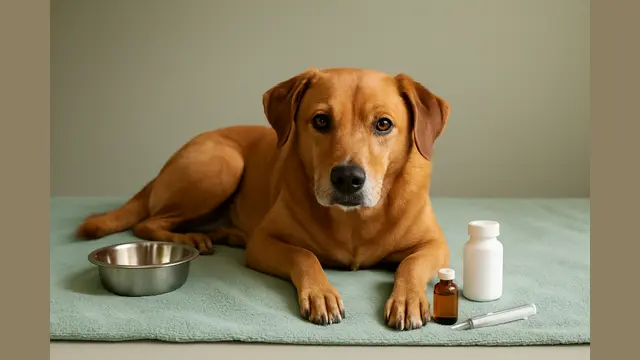
Why is there blood around my dog's anus, and when does the bleeding need urgent care?
Tell a skin wound or burst anal gland from blood in your dog’s stool. Learn which signs need urgent care and what details will help when you call your vet.

In this guide (6 sections)
Blood around your dog’s anus can come from a cut under the tail, a burst anal sac, or blood passed with a bowel movement. Go to an emergency vet now if your dog suddenly passes large amounts of bloody diarrhea, especially with vomiting. For a small streak on firm stool or a bloody spot on the fur, call your vet for advice; where you found it helps determine what your dog needs.
When bleeding needs urgent veterinary care
The amount of blood matters, but so does what’s happening to your dog. A streak on an otherwise formed stool is different from passing liquid stool full of blood. You don’t need to measure the blood or wait for a second episode to describe the difference.
- Sudden, profuse bloody diarrhea: Get emergency care. The diarrhea may contain clots. One possible cause is acute hemorrhagic diarrhea syndrome, an illness in which a dog can lose enough fluid to go into shock. Vomiting adds to that loss. The American Animal Hospital Association’s guide to severe bloody diarrhea explains why rapid assessment matters. Don’t delay the trip to get a photo or sample.
- Bleeding with marked weakness or very pale gums: Tell the emergency vet about your dog’s condition first, even if there’s no diarrhea. A small spot on the fur doesn’t tell you how much blood your dog may have lost elsewhere. The Schwarzman Animal Medical Center’s guide to anemia explains how bleeding inside the digestive tract or a problem with clotting can cause blood loss.
- Black, sticky, tar-like stool: Contact your vet promptly, even if you don’t see any red blood. This appearance can mean your dog is passing digested blood. Say whether your dog is also vomiting. Cornell’s guide to diarrhea in dogs describes why tarry diarrhea warrants veterinary care.
- One bright-red streak or a spot under the tail: If your dog seems comfortable, start with a call to your regular vet rather than assuming an emergency trip is necessary. Mention any painful swelling, pus, or repeat bleeding. A wound that has started to drain needs attention even if it’s no longer dripping.
One finding is easy to mistake for blood: a red tube of tissue sticking out of the anus. This can be a rectal prolapse, meaning part of the rectum has slipped outside. Skip the home checks and contact a vet immediately rather than trying to wipe it away. The PDSA guide to problems under a dog’s tail distinguishes protruding tissue from sores on the surrounding skin.
How to tell where the blood came from
Suppose you find a red smear where your dog was sitting, but the last stool looked normal. You haven’t missed an obvious answer: a mark on bedding can’t tell you whether a sore drained onto it or whether blood was already on the fur. If your dog is comfortable, three observations can help without putting pressure on a painful spot.
- Look under the tail without squeezing or probing. If your dog lets you lift the tail, look for a surface cut, a sore, or a small opening in swollen skin beside the anus. Blood spread over the fur is less specific than blood you can actually see coming from one spot. Stop if your dog resists. You don’t need to examine inside the anus.
- Look at the stool separately. Is there a red line on the outside of a hard stool, blood and mucus mixed into loose stool, or a few drops on the ground after your dog finishes? If you found the mark afterward, say that instead of guessing. A photo of the stool before you pick it up can preserve the detail your vet needs.
- Notice whether the blood appears with urination. In a female dog, discharge from the vulva, the opening below the anus, can stain the same patch of fur. If you see pink or bloody urine, or discharge from that opening, tell the clinic. “I saw blood when she urinated, but not when she pooped” is more useful than an uncertain claim that the anus is bleeding.
A bleeding hole beside the anus can be a burst anal sac
The anal sacs, often called anal glands, sit on either side of the anus. If one fails to empty, it can become blocked, swollen, and infected. A painful pocket of infection called an abscess can then form. If it breaks through the skin, you may see a small opening leaking blood, pus, or both. That’s one reason there can be blood on your dog’s bottom but none in the stool.
Think back to the hours before you noticed the spot. Was your dog scooting across the floor, turning to lick the area repeatedly, or giving off a fishy odor? These details can point toward an anal sac problem. Scooting may be your dog’s response to an already painful spot, not the reason it started bleeding.
Don’t squeeze a painful swelling to find out what’s inside. Don’t ask a groomer to empty it or put cream into a draining wound. Contact your vet even if the bump looks smaller now that fluid has come out. PDSA’s guide to anal gland abscesses describes the signs of a burst sac and why it needs veterinary attention.
What blood on or in the stool can mean
A fresh red streak on firm stool: Fresh blood passed with stool is called hematochezia. It often comes from the colon, rectum, or anus. Constipation is one possible explanation, especially if your dog passed a hard stool. But the red color alone can’t distinguish bleeding inside the bowel from a nearby sore that bled as the stool passed.
Blood and mucus with frequent trips outside: This pattern can point to colitis, or inflammation of the large intestine. Notice what actually comes out when your dog strains. A dog who urgently passes small amounts of loose stool and mucus may look constipated, but that’s a different pattern from struggling to pass a hard stool. VCA’s guide to colitis explains why the urge to go can persist even when little stool comes out.
Black, tarry stool rather than a red streak: This is called melena when digested blood gives stool its black, sticky appearance. The blood may come from higher in the digestive tract, but swallowed blood can also darken the stool. Tell your vet about the texture as well as the color. A description of “black and sticky like tar” conveys something different from “darker brown than usual.”
What to tell your vet and what happens next
Start with the most useful detail: “There’s a wound to the left of the anus that’s draining,” or “The skin looks clear, but there’s blood mixed throughout the diarrhea.” Then say when it started, how often it has happened, and whether your dog is vomiting, straining, or acting differently. If a photo is easy to get, take separate pictures of the skin and stool. Ask whether to bring a stool sample; PDSA’s guide to blood in stool explains how these can help.
Give the clinic the names of any medicines your dog takes, including anything given at home. Some anti-inflammatory pain medicines and steroids can contribute to digestive ulcers, which can bleed. The MSD Veterinary Manual lists medicines associated with digestive ulcers. Ask your vet before giving any medicine for the bleeding or pain; don’t give your dog ibuprofen.
What the clinic checks first depends on what you describe. A wound beside the anus points the exam toward the skin and anal sacs. Blood mixed with mucus points attention toward the bowel. Blood in both stool and urine is a reason to consider whether your dog’s blood is clotting normally. With severe bloody diarrhea, assessing and treating fluid loss takes priority over working out the exact trigger.
If your vet advises watching at home, ask what change should prompt another call. Note whether the next stool is formed or loose and whether fresh blood appears again. For a sore beside the anus, report whether the same spot swells or drains again. Those two patterns are more useful to your vet than a general report that the bleeding “comes and goes.”
Talk it through with Vicky
If you’re unsure how to describe what you found, you can tell Vicky what you’re seeing right now. Vicky will bring in Dr. Andy (Virtual DVM), our AI specialist in general veterinary practice, to help you organize the details for your clinic. If your dog has emergency signs, go directly to an emergency vet rather than waiting for a chat.
Common questions
Could grooming cause a bloody spot under my dog’s tail?
Clippers can leave a small cut or irritate the skin, and grooming products can cause redness. Tell your vet when the grooming happened and whether the blood is on the skin’s surface or draining from a swollen spot. Timing alone doesn’t rule out an anal sac problem.
Can stress or a sudden food change cause bloody stool?
Either can trigger colitis, which may cause blood or mucus in the stool along with an urgent need to go. Mention a recent change when you call your vet, but don’t assume it explains the bleeding.
Does scooting with blood mean my dog has worms?
Not necessarily. Intestinal parasites can cause colon inflammation and blood in stool, while scooting with a painful, draining spot beside the anus fits an anal sac problem. Tell your vet which pattern you see and ask whether a stool sample would help.
Could a bloody bump beside my dog’s anus be a hemorrhoid?
Don’t assume a bump is a hemorrhoid based on its appearance. A painful lump off to one side that opens and drains blood or pus can be an anal sac abscess. Let your vet check it rather than applying hemorrhoid cream.
What if bloody, mucus-covered stool keeps coming back?
Tell your vet how often it returns and whether the stool looks normal between episodes. With recurring colon inflammation, your vet may consider food intolerance or inflammatory bowel disease as well as parasites and infections.
Sources
- Bottom problems in dogs — PDSA
- Blood in your dog's poo — PDSA
- Diarrhea — Cornell University College of Veterinary Medicine
- Anal gland abscesses in dogs — PDSA
- Why Is My Dog Scooting? Common Causes and What to Do — American Kennel Club
- Nutrition for Dogs with Colitis — VCA Animal Hospitals
- Hemorrhagic Gastroenteritis — American Animal Hospital Association
- Anemia in Dogs and Cats — Schwarzman Animal Medical Center
- Common Causes of Gastrointestinal Ulcers in Dogs — MSD Veterinary Manual