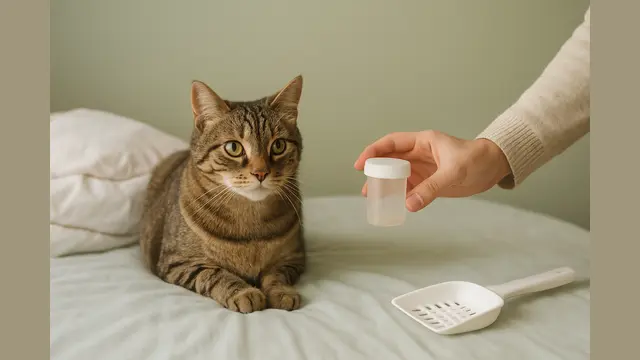
Why is my cat bleeding from the anus even when not passing stool, and how urgently does my cat need care?
Blood under your cat’s tail can come from the bowel, an anal sac, or urine. Learn which signs mean emergency care and what to tell your veterinarian.

In this guide (5 sections)
Blood can drip from the anus between bowel movements, but a sore beside the anus can also drain onto the fur or bedding. Call your veterinarian promptly even if you saw only one spot that has stopped. Go to an emergency vet now if blood keeps dripping, tissue sticks out of the anus, or your cat keeps squatting and produces only blood or a few drops with no normal urine.
Does my cat need an emergency vet or a regular appointment?
Go to an emergency veterinary hospital now if you see any of these signs:
- Heavy or ongoing bleeding. Fresh drops that keep falling are different from one dried spot on a blanket. Bleeding with pale or white gums, marked weakness, or collapse is especially concerning. Pale gums can be a sign of blood loss or shock. The Merck Veterinary Manual’s emergency assessment guide treats active bleeding as a reason for immediate assessment.
- Repeated squatting with little coming out. If your cat strains again and again and passes only blood or bloody mucus, don’t wait for a stool. If all you see are wet drops and you can’t tell whether your cat is passing urine, don’t wait for another litter box trip to settle the question. An emergency vet can check for a urinary blockage.
- Pink or red tissue coming through the anus. A lump or tube sticking through the opening may be a rectal prolapse, meaning part of the rectum has slipped outside. Exposed tissue can dry out and become damaged. Leave it alone and go in; you don’t need to identify it more precisely first.
- Bleeding with severe pain or marked illness. If your cat seems very painful or ill, particularly with repeated vomiting or severe diarrhea, don’t use the advice below for an otherwise comfortable cat.
A recent major injury or possible rodent bait ingestion also changes the decision, even if there is very little visible blood. Go to an emergency vet after a major injury. If your cat may have eaten bait, call your veterinarian or an animal poison control service now. Don’t make your cat vomit unless a veterinarian directs you to. If the package is handy, take it or a photo of its label. Texas A&M’s guide to pet emergency signs explains why you shouldn’t wait for severe signs after an injury or suspected poisoning.
Call your regular vet promptly for an appointment if you saw a small amount, it has stopped, your cat is comfortable and passing urine normally, and none of the emergency signs apply. Call today if the office is open; the clinic can tell you when the examination should happen. If it’s after hours and you’re unsure whether it can wait until morning, call for triage. PetMD’s guidance on blood and mucus distinguishes a small trace in a well cat from repeated straining that produces only blood or bloody mucus. Eating and playing normally are useful details, but they don’t explain the bleeding.
Why can blood appear when there’s no poop?
Blood from the lower bowel can come out separately from stool. The colon is the large intestine, and the rectum is its last section before the anus. When either is inflamed, a cat may repeatedly feel the need to poop and pass small, loose stools with mucus or fresh blood. PDSA’s guide to blood in a cat’s stool notes that fresh blood can streak the stool or drip from the anus. A red drop by itself doesn’t prove the bowel is inflamed.
A scrape or injury can bleed directly. A hard stool can scrape small blood vessels as it passes, leaving a red streak on its surface. An injury near the rectum can also bleed. Tell your vet if you actually saw hard stool. If you saw your cat squat but didn’t see what came out, describe the squatting rather than assuming your cat is constipated.
An infected anal sac can drain while your cat is resting. The anal sacs, sometimes called anal glands, sit beside the anus. An infected sac can form a painful swelling, then break through the skin. Blood or pus may drain from a small sore on one side without your cat passing any stool. VCA’s guide to anal sac disease in cats describes this pattern. The distinction that helps your vet is a sore beside the anus rather than blood coming through it. Don’t squeeze the area to check.
How can I tell where the blood came from?
Suppose your cat gets up from a blanket and leaves a red spot, but the poop in the box looks normal. The blanket tells you where the blood landed, not which part of your cat was bleeding. Once blood is on the fur, even a careful owner may not be able to tell. These observations can help without probing the area or delaying care:
- Identify the last normal pee you actually saw. Seeing your cat enter the box isn’t the same as seeing urine come out. In a shared box, a normal clump may belong to another cat. The Cornell Feline Health Center’s guide to urinary disease explains that urinary disease can cause blood and that a blocked cat may strain repeatedly while producing almost no urine. If that’s the pattern you see, seek emergency care rather than trying to decide whether the posture looks more like peeing or pooping.
- Notice what the blood was on or mixed with. A streak on a firm stool, mucus mixed with loose stool, pink urine, and a drop on otherwise clean bedding are different observations. Bright red color alone can’t distinguish them. If you didn’t see the blood come out, it’s useful to say exactly that.
- Look from the outside only, if your cat is comfortable. Note a visible sore, swelling, or discharge without touching it. In an unspayed female cat, bloody discharge from the genital opening can be the only visible sign of pyometra, a serious uterine infection. If you see bloody discharge from that opening, contact an emergency vet rather than treating it as an isolated spot from the bowel. Tell them whether your cat is spayed.
What should I tell the clinic, and what will the vet check?
Start with whether the bleeding is happening now, whether your cat is straining, and when you last saw a normal pee. Then describe when the bleeding started and the last stool you saw. “One spot where my cat sat” and “a fresh drop each time my cat squats” give the clinic more useful information than a guess about the volume of blood. Mention any vomiting, appetite change, injury, or possible bait exposure. A quick photo of the spot or stool can help, but don’t delay leaving to get one.
The vet’s first task is to locate the source. An examination of the skin under the tail, the rectum, and the anal sacs may reveal a draining sore or another local problem. If the blood seems to come from the urinary tract, an examination and urine testing can help narrow down the cause. If a bowel source is more likely, the vet may recommend a stool test, blood work, or imaging. PetMD’s overview of blood in cat stool describes these options. Your cat may not need every test; ask what question the recommended test will help answer.
Before you leave, ask what improvement should look like for the problem your vet found, when to expect it, and when to call back. If spotting returns, note whether it’s coming from the same place and whether it now happens with urine, with stool, or while your cat rests. Tell the clinic about that change rather than waiting for the next scheduled visit. If spotting turns into active dripping or repeated straining with no normal urine, use the emergency pathway instead.
Talk it through with Vicky
You can tell Vicky what you’re seeing right now, including where you found the blood and when your cat last passed urine normally. Vicky will bring in Dr. Ravi (Virtual DVM), our feline-friendly general practice veterinarian, to help you sort through those observations. If an emergency sign is present, go directly to an emergency vet rather than waiting for a reply.
Common questions
Does a bloody hole beside the anus still need attention if it has drained?
Yes. An infected anal sac can leave a draining sore when it breaks through the skin. Drainage doesn’t tell you whether the infection has cleared, so arrange a veterinary check rather than trying to empty it further.
How can I tell a swollen anal gland from a rectal prolapse?
An anal sac typically causes swelling or a draining spot to one side of the anus. Pink or red tissue sticking through the anal opening itself may be a prolapse; go to an emergency vet without trying to move it for a better look.
My cat’s anal glands were emptied, but the spotting came back. What now?
Call your vet for a recheck rather than assuming the sacs need emptying again. Tell the clinic whether you can see the same sore draining or whether the blood now appears with stool or urine; those findings point to different areas to examine.
Does a normal stool test rule out a cause for the bleeding?
No. A stool test doesn’t examine the anal sacs or surrounding skin, and it doesn’t test the urine. If bleeding returns, ask your vet whether another examination or a different test would help locate the source.
Do I need to bring a stool sample if the blood was only on the bedding?
A photo of the spot can show the vet what you saw even if there’s no stool to collect. Ask the clinic whether a sample would be useful, but don’t wait for your cat to poop before seeking care.
Sources
- Blood in your cat’s poo — PDSA
- Initial Triage and Resuscitation of Small Animal Emergency Patients — Merck Veterinary Manual
- Feline Lower Urinary Tract Disease — Cornell Feline Health Center
- Rectal and Anal Inflammation in Cats — PetMD
- Anal Sac Disease in Cats — VCA Animal Hospitals
- Blood in Cat Stool — PetMD
- Pyometra — American College of Veterinary Surgeons
- Rectal Prolapse in Cats: Common Causes and Prevention — PetMD
- The Hazards of Mice Poison for Pets — Pet Poison Helpline
- PetMD — Why Is My Cat Pooping Mucus?
- Merck Veterinary Manual — Disorders of the Rectum and Anus in Cats
- Texas A&M School of Veterinary Medicine & Biomedical Sciences — When Every Second Counts: Recognizing Pet Emergency Signs