What should I do if my dog has bloody diarrhea, and which signs mean it can't wait?
Know when bloody diarrhea means a trip to the emergency vet, who to call about a single red streak, and which details will help the clinic assess your dog.
In this guide (7 sections)
- Get urgent help
- What if it was one red streak and my dog is acting normally?
- What bright red blood, bloody jelly, and black stool can mean
- Why the vet asks about vomiting, age, and possible exposures
- What to do while arranging care
- What the clinic may check and what happens next
- Talk it through with Vicky
Get urgent help
Go to an emergency vet now if your dog is passing mostly blood or repeated bloody liquid or jelly, is vomiting repeatedly, seems very weak or in severe pain, or has collapsed. Call your veterinarian today for any bloody diarrhea, even one thin red streak in a dog who still wants to play. If the stool is black and tar-like, or your dog's gums look unusually pale, contact a veterinary clinic right away and lead with that detail.
Don't wait for another bowel movement if your dog already has an emergency sign. Water coming back up each time your dog drinks counts as repeated vomiting. A dog who seems brighter now may still have had several episodes overnight. Cornell's guide to when dogs need emergency care flags repeated diarrhea or vomiting, particularly when there's blood or low energy.
If poisoning is possible and your dog is already passing blood, go straight to a veterinary hospital. If someone is with you, they can call the hospital on the way. A possible poisoning needs action even before symptoms appear: call a vet or animal poison control immediately if the dog has not yet shown signs. Don't try to make your dog vomit unless a veterinarian tells you to. The ASPCA's guidance on suspected poisoning distinguishes a pet who is already bleeding from one who still seems well.
What if it was one red streak and my dog is acting normally?
For a single streak, make the call rather than trying to judge the risk by the amount of blood alone. Tell the clinic if your adult dog is alert, is drinking as usual, and hasn't vomited. Ask how soon your dog should be seen. If your regular vet is closed, call an after-hours clinic for that decision rather than assuming it can wait until morning.
It helps to describe the whole episode. For example, “one loose stool with a red line on the outside” is different from “the last stool had a red line, but the two before it were bloody liquid.” In the second situation, the last streak isn't the main concern; the repeated bloody diarrhea is. Start with that history even if your dog is standing at the door asking to go for a walk. PDSA's advice on blood in a dog's stool recommends contacting a vet whenever you see blood.
What bright red blood, bloody jelly, and black stool can mean
Color and texture give the clinic clues, but they don't tell you the cause or how much fluid your dog has lost. You don't need to know a medical term. Describe what you actually saw:
| Appearance | What to tell the clinic |
|---|---|
| Bright red drops or streaks | Fresh red blood often comes from the lower intestine, including the colon. Say whether it was on the surface, appeared at the end, or was mixed throughout the diarrhea. |
| Slippery, red, jelly-like material | Mucus can give stool a jelly-like appearance. Describe whether there was a little bloody mucus on stool or a whole puddle of bloody jelly. Those are different observations. |
| Black, sticky stool that looks like tar | This can be digested blood. Say “black and tar-like” rather than “dark diarrhea.” You don't need to see fresh red blood as well before seeking care. |
PetMD's guide to bloody diarrhea explains why blood doesn't always look red. If you aren't certain of the color, say so. The number of episodes, whether your dog has vomited, and how your dog is acting are still useful.
Why the vet asks about vomiting, age, and possible exposures
One reason vets take a sudden large amount of bloody diarrhea seriously is acute hemorrhagic diarrhea syndrome, or AHDS. A dog who seemed healthy earlier can develop heavy, jam-like diarrhea, sometimes with vomiting. The danger isn't only the visible blood: the dog can lose enough fluid to become critically ill. VCA's overview of AHDS describes this pattern, and the Merck Veterinary Manual's guide to AHDS treatment explains why fluids given through a vein may be needed promptly. Bloody jelly is a reason to describe the amount and act on heavy bleeding, not proof of AHDS.
In a puppy with bloody diarrhea, call for veterinary assessment now and give the puppy's age and vaccination history. One illness the vet may consider is parvovirus, often called parvo. It can cause both vomiting and bloody diarrhea; those signs also occur with other illnesses. Ask for arrival instructions when you call rather than trying to identify parvo by looking at the stool.
If a toy or another object is missing and your dog now has bloody diarrhea, tell the emergency clinic immediately. A swallowed object that gets stuck needs a different approach from an intestinal illness. Be clear about what you know: “a piece is missing” is useful information even if you didn't see your dog swallow it. Likewise, mention a change of food, but don't assume its timing explains the blood.
What to do while arranging care
- Start with the sign that worries you most. If your dog collapsed, say that before describing the stool. If your dog is alert but has passed bloody liquid four times, start with the four episodes. That puts the information that affects urgency at the beginning of the call.
- Give a short timeline. Say when the diarrhea started, when blood first appeared, and roughly how many times it happened. An estimate is enough. Include vomiting and whether water stays down. If you don't know because your dog went outside alone, tell the team what you did see rather than guessing.
- Describe changes from normal. Mention a loss of energy, a change in drinking, pale-looking gums, or apparent belly pain. Include anything your dog may have eaten and any medicine your dog has already had. Don't delay leaving to complete a checklist when your dog needs emergency care.
- Ask before trying a diarrhea remedy. Don't give Pepto-Bismol, Imodium, or another human diarrhea medicine unless your vet directs you to. Ask what to offer your dog to eat or drink while arranging care. If water keeps coming back up, go to the emergency clinic rather than testing whether the next drink stays down.
What the clinic may check and what happens next
The vet will consider the history alongside your dog's condition now. Checking for fluid loss and belly pain helps the team decide what needs attention first. A stool test, blood work, or imaging such as X-rays may help narrow down the cause. Not every dog needs every test. Cornell's guide to diarrhea in dogs describes how these tests fit into an evaluation.
If your dog has lost a great deal of fluid, treatment may start before the exact cause is clear. IV fluids go directly into a vein. That lets the team replace fluid without relying on a sick dog to drink and keep water down. You can ask two separate questions: “What does my dog need right now?” and “What are you checking for?” The vet may have an answer to the first before the second.
If your vet recommends care at home after assessment, ask what improvement should look like for your dog, when to give an update, and who to call overnight. Keep a brief record of stools, vomiting, drinking, and energy. Reporting “two loose stools since the visit, neither with visible blood, and no more vomiting” gives the vet more to work with than “a bit better.” If heavy or repeated bloody diarrhea, repeated vomiting, severe weakness, pain, or collapse develops, seek emergency care rather than waiting for a planned check-in.
Talk it through with Vicky
After contacting your clinic, you can tell Vicky what you're seeing right now and what your vet advised. Vicky will bring in Dr. Ivan (Virtual DVM, DACVECC), our Emergency & Critical Care Specialist, to help you understand the next steps. If your dog has an emergency sign, go to the hospital without waiting for a reply.
Common questions
My puppy has had a first round of shots. Should I still ask the clinic about parvo?
Yes. Tell the clinic which vaccinations your puppy has had and ask whether parvo needs to be considered. Don't use a first round of shots as a reason to put off calling about bloody diarrhea.
Should I try chicken and rice before calling about a little blood?
Call first. A dog who wants to eat still needs veterinary advice about blood in the stool. Ask whether a diet change is appropriate rather than waiting to see what happens after a meal.
Do I need a fresh stool sample before I leave for the vet?
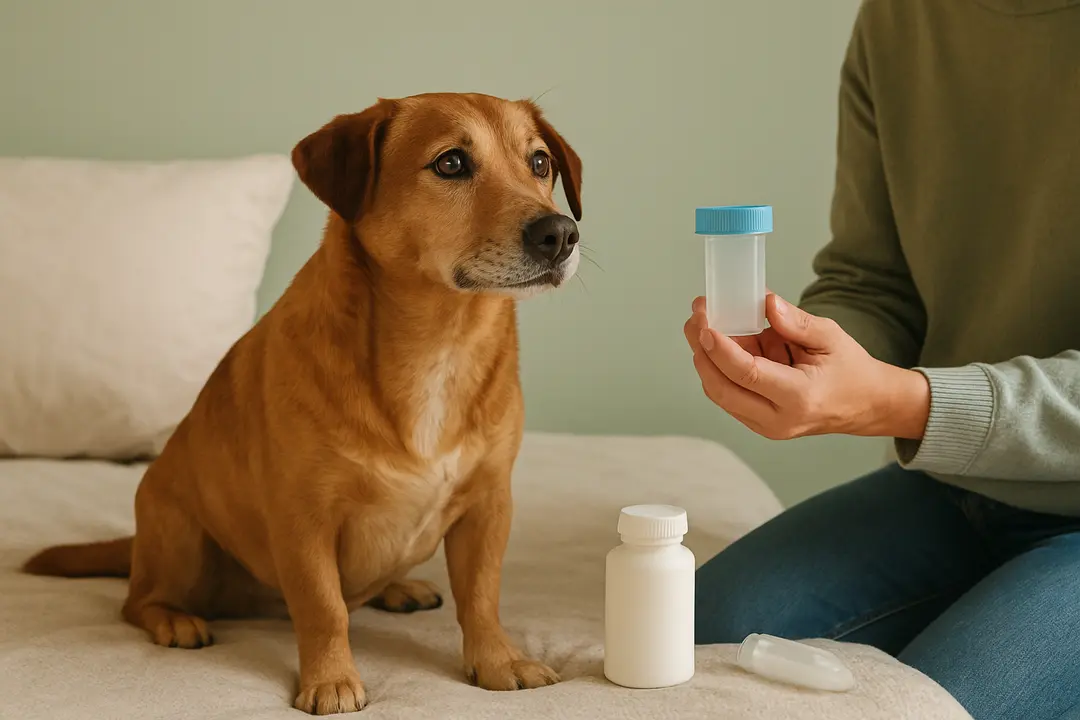
No. Ask whether the clinic wants a sample if one is already available, but don't wait for your dog to go again. You can describe the color, amount, and frequency even without a sample.
The blood stopped, but the diarrhea came back. Should I call again?
Yes. Report the earlier bleeding as well as the return of loose stool, even if the latest stool has no visible blood. Tell the clinic whether your dog is also vomiting or losing energy so they can advise you based on the change.
Sources
- Blood in your dog's stools — PDSA
- Bloody Diarrhea in Dogs — PetMD
- When to go to the ER — Cornell University College of Veterinary Medicine
- Acute Hemorrhagic Diarrhea Syndrome in Dogs — Merck Veterinary Manual
- Parvovirus: Transmission to treatment — Cornell University College of Veterinary Medicine
- My Pet Ate Something! When Should I Seek Help? — ASPCA Poison Control
- Eight home remedies for diarrhea and two that could be dangerous for your pet — VCA Animal Hospitals
- Gastroenteritis in Dogs — VCA Animal Hospitals
- Diarrhea — Cornell University College of Veterinary Medicine
- Blood in Dog Poop: Signs, Symptoms and Treatment — American Kennel Club
- Acute Hemorrhagic Diarrhea Syndrome in Dogs — VCA Animal Hospitals
- What to Do if Your Pet Is Poisoned — ASPCA Animal Poison Control