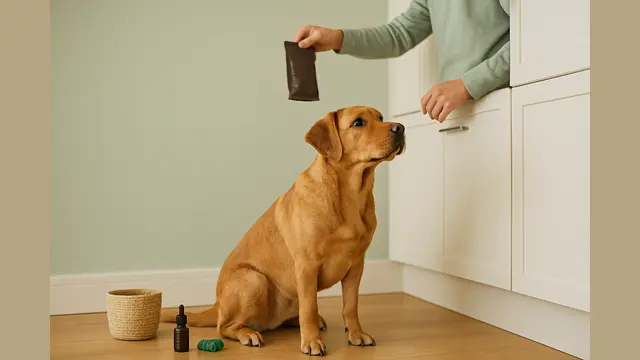
Is black pepper safe for dogs, and what should I watch for if my dog eats peppered food?
Find out when to monitor your dog after a peppered bite, which seasoning ingredients warrant a poison call, and what breathing trouble looks like.

In this guide (7 sections)
Get urgent help
Go directly to an emergency animal hospital if your dog is struggling to breathe, has blue or grayish gums, or collapses. If your dog ate one lightly peppered bite of otherwise dog-safe food and is breathing and acting normally, monitoring at home is generally reasonable. If the food contained onion or garlic, your dog may have eaten a lot of salt, or you can't account for a large amount of seasoning, call your veterinarian or an animal poison control service now, even if your dog looks well.
Watch your dog's sides as they breathe. Pulling hard with the belly to get each breath is different from a brief cough after sniffing pepper. Breathing effort alone is enough reason to go; don't wait for the gums to change color or stop to find the recipe. Cornell's guide to breathing distress in dogs explains what that effort looks like.
A few specks, a shaker spill, or a seasoning blend?
The useful question isn't how many black specks you can see. It's what your dog actually got into. A few accidental specks, a mouthful of loose seasoning, and a bite of meat cooked with garlic powder call for different decisions.
| What happened | What to do |
|---|---|
| One small bite, lightly seasoned with black pepper; you know the other ingredients are safe, and your dog seems normal | Remove the rest, leave fresh water available, and watch your dog's breathing, appetite, and stomach. |
| A shaker spilled, a sizable piece of pepper-crusted food is missing, or an ingredient may be toxic | Call your vet or animal poison control for advice specific to the amount, the ingredients, and your dog. |
| Your dog has breathing difficulty or collapses, whatever the amount | Go directly to an emergency animal hospital. |
Black pepper doesn't come with a reliable household cutoff, such as a certain number of turns of the pepper mill. NC State Veterinary Hospital's guide to people food makes a more useful distinction: spicy food can upset the stomach, while ingredients such as onions and garlic pose a different kind of risk. Don't use the advice for one lightly peppered bite to judge an empty shaker.
Check the whole dish, not just the pepper
A dog can snatch a piece of dinner even from a careful owner. Picture a small piece of chicken with black specks on it. If you cooked it yourself with a light grind of pepper and nothing else, you know what was in the bite. If it came from a takeout container, it may look identical, but you don't yet know what went into the rub or marinade. Here's how to narrow that down:
- Put the food and seasoning out of reach. Note when your dog got to them. If you didn't see it happen, use the window you do know, such as between setting the plate down and clearing the table.
- Find the ingredient list. Check the seasoning packet, sauce, or marinade as well as the food itself. For a home-cooked dish, ask the cook what went on the meat before it was cooked. For takeout, ask about the recipe. If you already suspect a toxic ingredient, make the call while someone else checks.
- Estimate what is missing. Was it a corner of one piece, the whole serving, or seasoning straight from the container? If powder is still spread across the floor, say so. There is no need to pretend you know exactly how much your dog swallowed.
Keep the package or take a readable photo of the label. The Pet Poison Helpline's advice on table food emphasizes that the recipe, portion, and pet's health all matter. The name of the dish alone doesn't tell the clinic enough.
Why garlic, onion, and salt change the advice
Onion and garlic, including powders, warrant a call. They can damage a dog's red blood cells, which carry oxygen. A dog can look well at first, so a normal appetite after the meal isn't a reason to wait. Tell the clinic whether the recipe used fresh onion or garlic, a powder, or a blend that lists either one. The Merck Veterinary Manual's guide to onion and garlic exposure explains why concentrated seasonings matter and why signs may be delayed.
Check the salt separately. A little salt on one bite isn't the same exposure as eating a pile of salty seasoning. If a substantial amount of salt may be missing, get veterinary advice immediately rather than waiting for vomiting or diarrhea. Leave your dog's usual fresh water available, but don't treat the water bowl as a substitute for that call. Pet Poison Helpline's guidance on excess salt addresses this specific risk.
What to watch for after a lightly peppered bite
If home monitoring fits your situation, use your dog's usual behavior as the comparison. You don't need to offer another piece of food to see what happens.
- Stomach and appetite: Notice repeated lip licking or drooling, whether your dog seems uncomfortable, and whether vomiting or diarrhea follows. Lip licking alone doesn't tell you that pepper was the cause. If your dog vomits or has diarrhea, note when it happened and whether it happens again.
- Eating, drinking, and behavior: At the usual opportunities, does your dog eat, drink, and act like themselves? Mild stomach upset can settle on its own in a dog who otherwise feels well. Call your vet if discomfort is getting worse, your dog no longer eats or drinks normally, or vomiting or diarrhea is repeated. Texas A&M's guide to a dog's stomach ache explains which changes merit veterinary care.
- Breathing after a spill: If your dog sniffed loose ground pepper, pay attention to what happens between sneezes or coughs. Inhaled particles can trigger a cough. A few sneezes that stop, followed by quiet, easy breathing, are different from a cough that keeps coming back. Call your vet for a persistent cough. If breathing becomes hard work, go straight to emergency care.
What to tell the clinic, and what happens next
Start with what your dog is doing right now, then give the food, amount, and time. For example: “My dog is breathing normally and hasn't vomited. A piece of seasoned meat is missing. The rub lists garlic powder, but I don't know how much was on that piece.” Have your dog's weight and any known health problems ready. If symptoms have started, describe what you saw rather than trying to decide whether it was poisoning.
Those details help the veterinary team decide whether you can watch at home or need to bring your dog in. Don't make your dog vomit or give a home remedy unless a veterinary professional specifically directs you to. The ASPCA's guidance for suspected poisoning recommends calling before giving anything as treatment, even when a pet still looks well.
If you're advised to monitor, ask what change should prompt another call and for how long to watch. There isn't one countdown that fits every peppered meal. After an otherwise safe bite, a return to comfortable behavior, normal eating and drinking, and no further stomach upset is reassuring. After possible onion or garlic exposure, signs of red blood cell damage can take days to appear. In that situation, follow the plan the clinic gives you rather than treating one symptom-free evening as an all-clear.
Talk it through with Vicky
If your dog is stable, you can tell Vicky what you're seeing right now, including what was in the food and how much is missing. Vicky will bring in Dr. Nora (Virtual DVM, DABT), our veterinary toxicologist, to help you sort through the exposure. For suspected poisoning or trouble breathing, use the urgent route above first.
Common questions
What if my dog ate whole peppercorns instead of ground pepper?
There isn't a reliable peppercorn count you can use as a safe limit. If your dog got into a container, tell your vet how much it held, how much is left, and whether any spilled; don't guess at a dose.
Is lemon-pepper chicken different from chicken with plain black pepper?
The name “lemon pepper” doesn't tell you the whole recipe. Check the blend for garlic powder, onion powder, and salt. Call your vet or animal poison control if either powder was involved or your dog may have eaten a substantial amount of salt.
Is black pepper the same as cayenne or chili flakes for dogs?
No. Cayenne and hot chili peppers contain capsaicin, the substance that gives them heat and can irritate the digestive tract. If your dog ate a spice mix, give the clinic its actual ingredients rather than describing all of them as pepper.
Should I add black pepper to my dog's meals or turmeric supplement?
Tolerating a few accidental specks isn't a reason to add pepper on purpose. Leave your dog's portion unseasoned, and ask your vet about the specific supplement before changing what you give.
Sources
- Healthy Human Food Treats for Pets — NC State Veterinary Hospital
- When To See A Veterinarian For A Dog’s Stomach Ache — Texas A&M
- Thanksgiving Pet Safety Tips — Pet Poison Helpline
- The Dos and Don’ts of Feeding Pets People Food — Texas A&M
- Garlic and Onion (Allium spp) Toxicosis in Animals — Merck Veterinary Manual
- Common Botanical Products in Veterinary Medicine — Merck Veterinary Manual
- My Dog Ate Too Much Salt — Pet Poison Helpline
- Clinical Signs of Respiratory Disease in Animals — Merck Veterinary Manual
- Recognizing and Responding to Canine Respiratory Distress — Cornell University
- What to Do if Your Pet Is Poisoned — ASPCA