Why is my cat coughing, and when does a cough need urgent veterinary care?
Learn how to tell a cat’s cough from a hairball, which breathing changes mean go to the ER now, and when to call your vet about repeated hacking fits.
In this guide (7 sections)
Asthma, bronchitis, infection, and parasites can all make a cat cough, and smoke or dust can trigger a fit. Go to an emergency vet now if your cat is struggling to breathe, breathing with an open mouth at rest, has blue-gray gums or tongue, or coughs up blood. One brief, dry cough in a cat who then breathes, eats, and acts normally can usually be watched; repeated fits or mucus warrant a call to your vet.
When a coughing cat needs the emergency vet
Watch your cat between the hacks. A cat who stretches their neck to cough and then breathes comfortably is different from a cat who keeps their mouth open, pushes hard with their belly with each breath, or can't catch their breath after the fit. If you see that struggle, leave for an emergency clinic. Don't wait for your cat to collapse or for their gums to change color. VCA Animal Hospitals’ guide to coughing in cats explains the difference between a coughing fit and trouble breathing.
Blood changes the decision, even if the fit has stopped. Mucus with a red streak counts as coughing up blood; it doesn't have to be a mouthful. PetMD’s guide to cat coughing advises immediate veterinary attention. A blood clot in the lungs is one serious possible cause, not a diagnosis you can make from the color. You don't need to work out the cause before leaving.
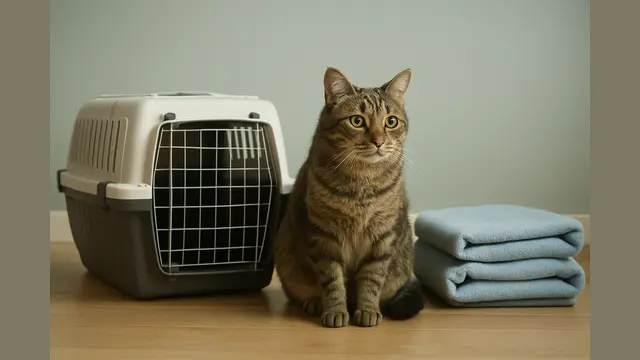
Handle your cat as little as you can for the trip. Use a secure carrier with room to lie down and keep its air openings clear, as described in PDSA’s cat carrier guidance. If someone is with you, have them call the ER on the way. Don't delay to count breaths, film the episode, or get a closer look inside your cat's mouth.
If your cat is breathing comfortably, what can wait?
Use the pattern of coughing and how your cat feels to decide what to do. You don't have to wait a set number of days for a cough to qualify for a call.
| What you notice | What to do |
|---|---|
| One brief, dry cough; breathing, appetite, and activity are back to normal | Note when it happened and watch for another fit. An immediate exam isn't usually needed. |
| Separate fits keep happening, the cough is getting worse, or your cat brings up mucus without blood | Call your regular vet to arrange an assessment. Mention the mucus even if your cat seems well afterward. |
| Your cat is eating less or is less active than usual along with the cough | Call your vet and describe both changes. This is no longer an isolated cough in an otherwise well cat. |
Marked lethargy is different from a small dip in activity. If your cat seems profoundly listless and you're unsure they're stable, call an emergency clinic for guidance now rather than leaving a message for a routine appointment. If breathing is visibly difficult, go directly to the ER instead.
For a cat who is stable but needs assessment, urgent care is an option if your clinic is unavailable. For example, the University of Illinois Veterinary Teaching Hospital lists stable cats with a cough among the patients its same-day service can see. Call ahead to find out where your cat can be seen; this is a different service from emergency care for a cat struggling for air.
Is it a cough or a hairball that won't come up?
Picture a cat crouching low, reaching their neck forward, hacking several times, then gagging. It's understandable to look on the floor for a hairball. But a cough is a forceful push of air out of the airways, and a coughing fit can end in a retch. A hairball, by contrast, comes up from the stomach. The crouch and the gag alone don't tell you which happened.
Look at the whole sequence rather than the last sound. Did a clump of fur come up? Was there mucus? Did you see nothing at all? If there was no hairball, describe it as hacking followed by a gag rather than assuming there's fur your cat still needs to bring up. In particular, don't wait for a hairball to appear before calling about repeated episodes. This is an easy distinction to miss, even when you're watching closely.
Why asthma, bronchitis, and household triggers matter
Asthma and bronchitis can inflame the airways that carry air inside the lungs. A cat may have a dry, hacking cough or a wheeze, a whistling sound as they breathe. Washington State University’s guide to feline asthma notes that an asthma cough can look like an attempt to bring up a hairball. Infections and parasites can cause similar signs, so the sound alone can't identify the cause.
A trigger is something that brings on or worsens signs; it isn't necessarily the underlying illness. Think about what was in the air when your cat started coughing. Was there a cloud of litter dust? Had someone smoked, put on perfume, or used a cleaning spray nearby? Keep smoke and sprays away from your cat, and consider a less dusty litter if dust is an issue. Don't use the spray again to test your theory. The original timing is useful information for your vet, even if you aren't sure there's a connection.
What to record for your vet
For a cat who is comfortable, a short video of a fit that happens on its own can show your vet the posture and sounds. If the fit is over by the time you reach your phone, these details are useful on their own:
- Count separate episodes. Five hacks in one short burst is a different history from five fits spread across the day. Note roughly how long each fit lasted and whether you've seen one before.
- Separate what you heard from what you saw. A wet-sounding hack doesn't mean you saw mucus. Note the sound, whether there was a final retch, and what, if anything, landed on the floor.
- Describe the recovery. Say whether your cat went back to breathing comfortably, ate their usual meal, and resumed their normal activity. Mention changes from what's normal for your cat.
- Start the call with how your cat is doing right now. Then give the number of fits, what came up, and any possible exposure. That lets the clinic address the immediate decision before discussing what might be causing the cough.
What to do while you wait for an appointment
Don't give human cough syrup or cold medicine. A product sold for coughing may also contain a decongestant or a pain reliever such as acetaminophen, which can poison cats. Both VCA’s medication guidance for cat owners and Pet Poison Helpline’s guide to cold medicines explain the risks of combination products. If your cat has already swallowed one, call your vet or an animal poison control line now. Have the package handy and don't make your cat vomit unless a veterinarian tells you to.
At the appointment, your vet can use your account of the fits along with the exam, even if your cat doesn't cough in the room. Ask which possible causes they are considering and what would help tell them apart. If they recommend monitoring, agree on what change should prompt an update. For example, a single dry hack that becomes a series of daily fits is worth reporting even if your cat still finishes every meal. New trouble breathing or blood means emergency care, not waiting for the scheduled visit.
Talk it through with Vicky
If your cat is breathing comfortably and you're unsure how to describe what happened, you can tell Vicky what you are seeing right now. Vicky will bring in Dr. Ravi (Virtual DVM), our feline-friendly general practice veterinarian, to help you organize what you noticed and prepare your questions for your clinic.
Common questions
My cat went straight back to playing. Does that mean I can cancel the exam?
If the visit was arranged because of repeated fits, call the clinic before canceling. Returning to play is useful information about how your cat feels between fits, but it doesn't explain why the cough keeps coming back.
Could it still be asthma if the coughing stopped after I changed the litter?
Yes. Less dust can mean fewer triggers for inflamed airways. Improvement after a litter change is worth reporting, but it neither proves nor rules out asthma.
What if I can't tell whether the spot on the floor is bloody mucus?
If you think your cat may have coughed up blood, contact an emergency clinic now and describe what you saw. If you can see blood, even a streak in mucus, go in rather than waiting for a second episode to confirm it.
Should I wait for another fit so I can send my vet a better video?
No. A video is helpful, not a requirement for care. Call about recurring fits with the information you already have, and skip filming altogether if your cat is having trouble breathing.
Sources
- How to get your cat in a carrier — PDSA
- Coughing in Cats — VCA Animal Hospitals
- Urgent and Convenient Care — University of Illinois Veterinary Teaching Hospital
- Cat Coughing: Why It Happens and When To Call Your Vet — PetMD
- Asthma and Bronchitis in Cats — VCA Animal Hospitals
- Are over-the-counter medications safe for my cat? — VCA Animal Hospitals
- Merck Veterinary Manual — Blood Clots and Aneurysms in Cats
- Cats Protection — How to make vet visits less stressful for your cat
- Washington State University Veterinary Teaching Hospital — Feline asthma
- Preventive Vet — Why Cats Cough and How You Can Help
- Pet Poison Helpline — Cold and Flu Medications