What should I do if my dog has loose stools and is vomiting, and when is it urgent?
Learn when vomiting and loose stools in a dog need emergency care, when to call your vet today, and how to offer water and food after a mild episode.
In this guide (7 sections)
- When to go to the emergency vet now
- What if there’s blood in the diarrhea or vomit?
- When to call your vet today rather than keep watching
- Could it be the food, a swallowed object, or poisoning?
- How to watch an isolated episode and restart water and food
- What to tell the clinic and what the vet may check
- Talk it through with Vicky
You can briefly watch an otherwise healthy adult dog after one vomit and one loose stool if your dog feels well again, eats and drinks normally, and there’s no blood or concern about anything they swallowed. Call your vet today if the vomiting keeps happening, even small drinks come back up, stools become frequent and watery, or your dog loses energy or appetite. Go to an emergency veterinary hospital now for collapse, trouble breathing, severe belly pain, black tar-like stool, or a large amount of bloody diarrhea.
When to go to the emergency vet now
Look at your dog before you start cleaning up. Can they get up and walk normally? Are they breathing comfortably? If you can easily see their gums, do they look unusually pale or white? Collapse, difficulty standing or walking, pale or white gums, and difficulty breathing are reasons to go now. Don’t wait for another vomit or bowel movement. Ohio State’s guide to pet emergencies and the Merck Veterinary Manual’s guide to when to see a vet describe signs that need immediate assessment.
Severe pain is also an emergency. If your dog’s belly looks swollen or your dog keeps trying to throw up but brings up little or nothing, describe that to the emergency clinic. Repeated dry heaving is different from vomiting once and then settling comfortably. You don’t need to press on the belly to prove it hurts.
What if there’s blood in the diarrhea or vomit?
Tell the clinic where you saw the blood, what it looked like, and roughly how much there was. Those details are more useful than saying your dog had an upset stomach.
| What you see | What to do |
|---|---|
| A small streak of fresh red blood on a loose stool | Call your vet promptly. Mention the vomiting, even if it has stopped. |
| Sudden diarrhea containing a large amount of red blood | Go to an emergency hospital now. Don’t wait for your dog to look weak. |
| Black, sticky stool that looks like tar | Go to an emergency hospital now. Describe the texture as well as the color. |
| Red blood or dark material like coffee grounds in vomit | Call a vet right away. If there’s substantial bleeding, contact the emergency hospital directly; if your dog collapses or has pale gums, go straight there. |
As PetMD’s guide to blood in a dog’s vomit explains, the coffee-ground appearance can come from blood that has already been partly digested. You don’t have to be sure what the material is before you seek help.
When to call your vet today rather than keep watching
Call if your dog keeps vomiting, makes repeated trips outside to pass watery diarrhea, turns away from food, or seems quieter and less responsive than usual. If your dog wants to drink but vomits after each attempt, the water isn’t staying down. There’s no need to keep testing with more water. If your vet is closed, call a veterinary urgent care or emergency clinic for guidance.
Age and usual health change the decision. Call promptly about a puppy with both signs; puppies can lose enough fluid to become dehydrated after only a few episodes. Also tell the clinic if your dog is a senior or already has a medical condition. The home observation plan for an otherwise healthy adult may not suit your dog. Texas A&M’s guidance on stomach upset explains why appetite, behavior, age, and a possible swallowed object matter alongside the number of episodes.
There’s also a limit to watching mild signs. If the vomiting stops but loose stools last more than 24 hours, contact your vet even if your dog still seems well. That is not a reason to wait a full day with ongoing vomiting, blood, poor appetite, or low energy.
Could it be the food, a swallowed object, or poisoning?
A recent food change can cause loose stools, but the timing of a new meal doesn’t prove it caused the problem. Other possibilities include intestinal parasites, infections such as parvovirus, inflammation of the pancreas (pancreatitis), and an intestinal blockage. PDSA’s guide to diarrhea in dogs describes these different causes. At home, the most useful question isn’t which diagnosis fits the stool. It’s whether your dog had access to something that changes what you should do next.
- A sock, toy, or other object: If you saw your dog swallow it, or a piece is missing and your dog now has symptoms, call your vet rather than trying a different meal. Say whether you saw it happen or suspect it. Both are useful details.
- A possible poison or extra medication: Call your vet or US ASPCA Poison Control immediately, even if your dog looks well. Don’t give a home remedy or make your dog vomit unless a veterinary professional directs you to. Cornell’s poison first-aid guide and ASPCA Poison Control’s instructions explain what to do before attempting any treatment.
For a possible poisoning, have the package or remaining pills handy if available. Give the product name and ingredients, the amount your dog might have swallowed, when it happened, and your dog’s weight. An estimate is useful; don’t delay the call to work out an exact amount.
How to watch an isolated episode and restart water and food
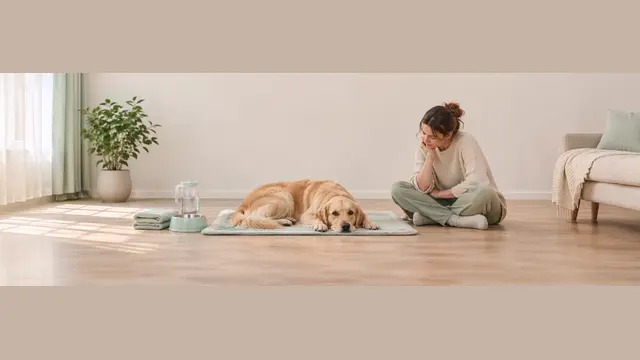
Suppose your adult dog throws up after breakfast, passes a soft stool on a walk, then comes home alert and comfortable. If there are no warning signs or suspected exposures, brief observation is reasonable. The aim is to see whether the upset has stopped, not to wait a set number of hours while it continues.
- Once mild vomiting has stopped, offer a small amount of water. Notice whether it stays down and whether your dog returns to normal drinking. Repeated vomiting after sips changes the plan from home care to a call to the clinic.
- If water stays down and your dog is interested in eating, offer a small bland meal. The American Kennel Club’s veterinary guide to dog vomiting recommends starting with small amounts after mild vomiting settles. A meal is not a treatment for ongoing vomiting or a suspected blockage.
- Track vomiting and stools separately. Note when each happens. A soft stool that still holds some shape is different from several puddles of watery diarrhea. Write down whether vomiting followed food or water and how your dog behaved afterward.
- Look for a return to your dog’s usual habits. Keeping water down, showing interest in food, and getting up and moving comfortably are more useful together than one playful moment. If your dog stops vomiting but refuses the next meal or stays unusually quiet, tell your vet about that change.
What to tell the clinic and what the vet may check
Lead with the detail that made you call: your dog can’t stand, water keeps coming back up, or part of a toy is missing, for example. Then give your dog’s age, when the trouble started, how often each symptom has happened, and how your dog is acting now. For a puppy, have the vaccination history ready if you know it.
Your vet may ask about recent food, access to trash or medicines, earlier episodes, and ongoing illness. At the visit, the vet can check for dehydration, belly pain, and swelling and may recommend blood tests. The exam helps answer a question the appearance of the stool alone can’t: what care does this dog need?
If your dog goes home after the visit, ask what to offer at the next drink and meal, when to resume the usual food, and what change should prompt a return. That gives you a plan for the next day based on what the vet found, rather than a feeding schedule meant for a different dog.
Talk it through with Vicky
If your dog is stable, you can tell Vicky what you’re seeing right now, including whether water stays down and how your dog acts between episodes. Vicky will bring in Dr. Ivan (Virtual DVM, DACVECC), our virtual Emergency & Critical Care Specialist, to help you organize your observations. For emergency signs, go directly to an emergency veterinary hospital rather than waiting for an online reply.
Common questions
Could my dog still have a blockage if they’re passing diarrhea?
Yes. Intestinal blockage is one possible cause of diarrhea, so passing a loose stool doesn’t rule it out. If your dog is vomiting and a sock or piece of a toy may be missing, tell your vet what the object was and when your dog could have reached it.
Could my puppy have parvo even if there’s no blood yet?
Stool color alone can’t tell you whether your puppy has parvovirus or another cause of stomach upset. Call promptly about vomiting with diarrhea in a puppy, and tell the clinic your puppy’s age and vaccination history rather than waiting for blood to appear.
When should I switch back from chicken and rice to my dog’s regular food?
If your vet recommended a temporary bland diet, ask when and how to return to regular meals based on your dog’s progress. If vomiting returns or your dog won’t eat, call rather than switching foods again to see whether that helps.
What if my dog started vomiting after a new medication?
Tell the prescribing clinic the medication name, when your dog received it, and when the vomiting and loose stools began. Ask what to do about the next scheduled dose; if your dog might have swallowed extra medication, call your vet or animal poison control immediately.
Sources
- VCA Animal Hospitals: Urgent Care for Diarrhea or Vomiting
- Merck Veterinary Manual: Acute Hemorrhagic Diarrhea Syndrome in Dogs
- PetMD: Why Is My Dog Throwing Up Blood?
- Cornell University College of Veterinary Medicine: First-aid for poisonous substances
- Texas A&M Veterinary Medicine: When To See A Veterinarian For A Dog’s Stomach Ache
- VCA Animal Hospitals: Gastroenteritis in Dogs
- Ohio State University Veterinary Medical Center — What Constitutes a Pet Emergency?
- Merck Veterinary Manual — When to See a Veterinarian
- PDSA — Dog Diarrhoea
- American Kennel Club — Dog Vomiting: Causes, Diagnosis, and Treatment
- ASPCA Poison Control — What to Do if Your Pet Is Poisoned