How long can my horse safely run, and what signs mean it's time to stop and rest?
Plan canter and walk breaks, check your horse’s stride and breathing, and know when to keep your horse still, start cooling, or call for emergency help.
In this guide (7 sections)
- When a walk break is right—and when it isn’t
- How to plan canter intervals for your horse
- What fatigue or soreness can feel like from the saddle
- How to check breathing and pulse during rest
- How to cool a hot horse after exercise
- What to tell the clinic and how to plan the next ride
- Talk it through with Vicky
There’s no safe number of minutes or miles that applies to every horse. A flat-out gallop is a sprint; for a fit horse moving comfortably, plan short stretches of controlled canter with walk breaks rather than one continuous run. End the faster work if the stride shortens or becomes uneven, your horse needs repeated urging, or breathing becomes heavy.
When a walk break is right—and when it isn’t
If you ease out of a canter as planned and your horse is alert, moving evenly, and breathing more easily as the effort drops, a relaxed walk is a reasonable break. But don’t use walking as a test for a horse that looks ill or hurt. Three situations call for a different response:
- Your horse is struggling to breathe, breathing stays labored after you stop, or your horse staggers or collapses. Call your equine veterinarian’s emergency line or an equine emergency hospital now. If your horse is hot after exertion, start cooling with water immediately and keep cooling while help is arranged. Don’t wait for collapse or a temperature reading to act on suspected heatstroke.
- Your horse suddenly refuses to put weight on a leg. A fracture is possible. Keep your horse still and call for emergency equine veterinary help now, rather than booking a regular appointment. Don’t lead your horse back to the stable to see if the limp improves. The University of Minnesota’s equine first-aid guide identifies fracture as a possible cause, and the American College of Veterinary Surgeons’ fracture guidance explains why you should keep the horse quiet and get instructions before moving.
- Your horse’s back or hindquarter muscles become painfully tight and your horse resists moving. Stop exercise; don’t try to walk out the cramp. This can be tying-up, a painful muscle problem associated with exercise. Call for emergency veterinary advice now. NC State’s equine emergency service includes muscle cramping among the reasons for immediate evaluation.
How to plan canter intervals for your horse
Start with the work your horse has done recently. The length of your entire trail ride tells you little about the length of any one effort. An hour that includes walking, trotting, and a few short canters is a different task from holding a fast gait without a break. A horse can sustain its individual top speed only briefly, and even slower, prolonged work can lead to dehydration and overheating.
- Start at a walk. If your horse is returning after time off, make walking the work rather than using a gallop to test fitness. For a horse already accustomed to faster work, Utah State University Extension’s conditioning guide recommends a 10–20-minute walking warm-up. Notice how the steps feel today. An uneven walk is a reason not to progress to trot.
- Add trot before canter. If the trot feels even and familiar, and your horse is conditioned for it, choose a short stretch for a controlled canter, also called a lope. Pick where you’ll slow down before you start. Come back to walk sooner if the rhythm or your horse’s response changes.
- Make the next interval optional. Use the break to watch breathing and feel the walk, not to count down to the next canter. On a hot, humid day, shorten the effort, stay at a slower gait, or leave canter work for another day. Plan where your horse can drink and where you could stop in shade.
What fatigue or soreness can feel like from the saddle
Picture a horse that usually holds a canter with one light cue. Today the strides get shorter, the horse drops back into trot, and you find yourself asking again every few steps. The useful signal is the change from what’s normal for this horse. Let the transition to trot happen rather than urging your horse on to the landmark you picked.
Slowing, stumbling, new resistance, and a delayed response to familiar cues are reasons to end faster work. They don’t tell you on their own whether your horse is tired or sore. Pay particular attention if one step feels different from the next. As the American College of Veterinary Surgeons notes, a rider can sometimes feel an uneven gait before a person watching can see it.
For a subtle uneven step or a recurring loss of rhythm in a horse that is still bearing weight and otherwise comfortable, end the ride and arrange a prompt regular veterinary evaluation. Don’t repeat the canter to prove that something is wrong. This is different from a sudden refusal to bear weight, which needs emergency help where your horse stands.
How to check breathing and pulse during rest
Practice on a quiet day when your horse is healthy and rested. Knowing what easy breathing looks like and where to find the pulse makes both checks more useful after exercise. Texas A&M’s guide to checking your horse’s health describes what you can observe yourself.
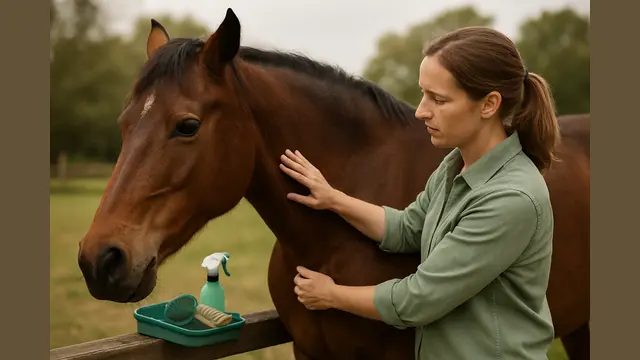
- Watch the flank, the area just in front of the hind leg. One rise and fall is one breath. Count for a minute to get breaths per minute. Also notice the effort: a number alone doesn’t tell you whether each breath looks comfortable.
- Feel under the lower jaw for the pulse. Use your fingertips and count the beats for a minute. If you have trouble finding it, ask your veterinarian to show you at a routine visit. Write down the resting count alongside the breathing count so you have your own horse’s baseline.
- During an ordinary break, look for a trend. Note when faster work ended. Compare readings taken during rest: are pulse and breathing coming down toward their usual resting pattern? Is your horse alert, with breathing growing easier and steps staying even? A falling pulse doesn’t cancel out an uneven stride, and a horse in breathing distress needs help, not another count.
How to cool a hot horse after exercise
In humid air, sweat doesn’t cool a horse as effectively. The same route and pace can therefore call for a different decision today than on a dry day. Heavy breathing during work is a reason to stop the effort. A hot horse whose breathing remains abnormal, whose pulse stays rapid, or who seems dull rather than alert raises concern for heat illness. You don’t need to wait until your horse looks exhausted to act.
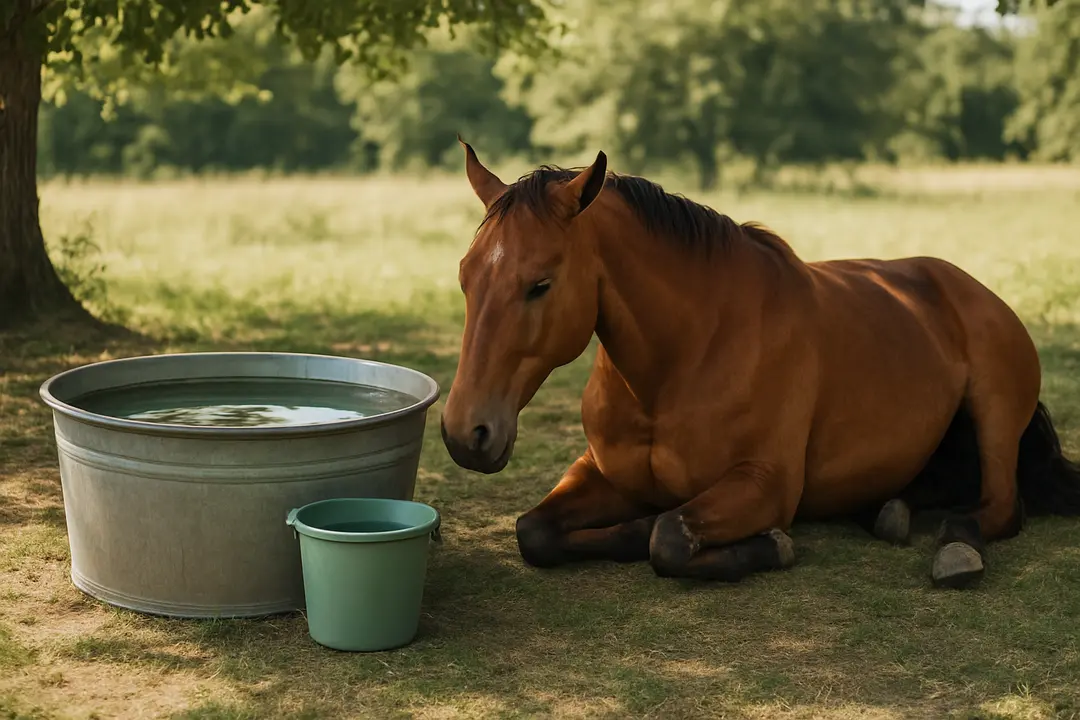
For suspected heatstroke, call for emergency equine veterinary help immediately and cool at the same time. If another person is there, have them make the call while you start using water. Dismount, remove tack if safe, and use shade and moving air if available. Apply cool or cold water over the body continuously with a hose. Without a hose, sponge repeatedly with fresh cool water. Offer fresh drinking water. Don’t substitute walking laps for cooling.
University of Minnesota Extension’s hot-weather guidance explains the value of water, shade, and airflow. World Horse Welfare’s heatstroke guide describes how abnormal breathing and dullness can precede loss of coordination or collapse. Keep cooling while you follow emergency instructions. If your horse goes down, continue from a position where you’re safe.
What to tell the clinic and how to plan the next ride
Tell the clinic what changed first: for example, your horse broke from canter to trot repeatedly, one step felt shorter, or breathing stayed hard after you stopped. Say what work your horse is used to, how long the uninterrupted effort lasted, how hot or humid it was, and whether your horse is alert and bearing weight. Report any cooling you’ve started. Give pulse and breathing counts if you already have them; never delay an emergency call to collect them.
After an ordinary ride, note how long the comfortable stretch lasted, not how long you managed to keep going. That gives you a place to plan an earlier walk break next time. If a gait change keeps returning, leave faster work out until your veterinarian can assess it. The details you felt in the saddle are useful even if the uneven step isn’t obvious at the appointment.
Talk it through with Vicky
For help planning a nonurgent ride or describing a change you felt in the saddle, you can tell Vicky what you’re seeing right now. Vicky will bring in Dr. Diego (Virtual DVM, DACVSMR), our Sports Medicine & Rehabilitation Specialist. If your horse is showing emergency signs, call your equine veterinarian’s emergency line or an equine emergency hospital now rather than waiting for chat.
Common questions
Does a 50-mile endurance ride mean the horse ran 50 miles without stopping?
No. The mileage describes the whole route, not the gait used for each mile or the length of any uninterrupted stretch. It isn’t a target for how far your horse should canter.
Should a walk break last as long as the canter interval?
There’s no one-to-one rule that guarantees recovery. If the planned break is over but your horse is still breathing hard or moving differently, skip the next canter.
Can I let a hot horse drink while I’m hosing with cold water?
Yes. Offer fresh drinking water while you cool the body; there’s no need to finish hosing first. If you suspect heatstroke, call for emergency equine veterinary help immediately and continue cooling.
Is there a temperature cutoff for cantering a fit horse?
Temperature alone can’t give you a reliable cutoff. Humidity makes sweat less effective at cooling your horse, so reduce hard work in muggy conditions even if the temperature is one your horse has handled before.
How should I restart canter work after an injury if my horse feels eager?
Ask the veterinarian managing the injury when to add canter back to the plan. A horse’s willingness to go faster doesn’t establish that the injury has healed, and a general walking warm-up is not clearance to canter.
Sources
- Fatigue and Exercise in Horses — Merck Veterinary Manual
- Saddle Up for Summer: USU Offers Tips for Getting Horses in Shape — Utah State University Extension
- Lameness in Horses — American College of Veterinary Surgeons
- Learning To Evaluate A Horse’s Health On Your Own — Texas A&M Veterinary Medicine
- Caring for Horses During Hot Weather — University of Minnesota Extension
- Fractures in Horses – Emergency First Aid and Stabilization — American College of Veterinary Surgeons
- Equine: Emergency — NC State Veterinary Hospital
- Fatigue During High-Intensity Exercise in Horses — Merck Veterinary Manual
- Heatstroke in horses — World Horse Welfare
- Hot Weather Hazard for Horses — Kentucky Equine Research
- Basic first aid for your horse and preparing for emergencies — University of Minnesota Extension
- Exertional Myopathies in Horses — Merck Veterinary Manual