What is pigeon fever in horses, and what signs should prompt me to call my vet?
Recognize the three forms of pigeon fever in horses, learn which signs to report even without a fever, and know when to call an emergency equine vet.
In this guide (6 sections)
Pigeon fever is a bacterial infection that can cause a pocket of pus (an abscess) on a horse’s chest or belly, an abscess inside the body, or a painful infection in a leg. Call your vet about a new tender lump, a hot and painful swollen leg, or fever with poor appetite, even if you can’t find a lump. If your horse is down and cannot get up, call an emergency equine vet now.
Should I call my regular vet or the emergency vet?
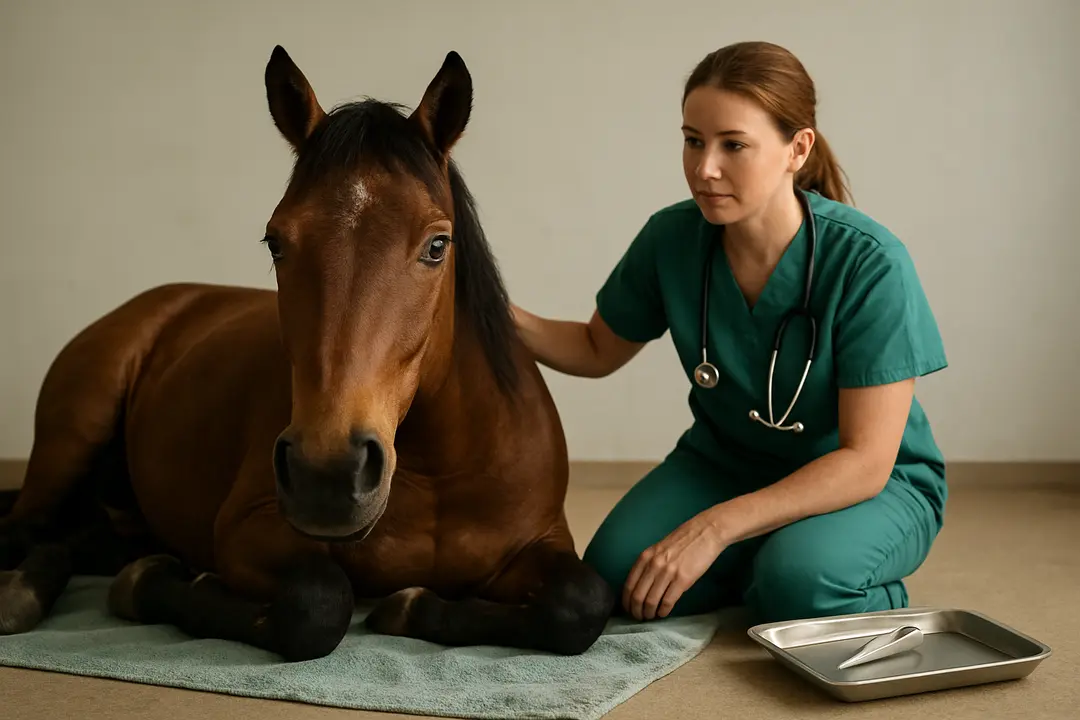
Use the emergency service now if your horse has gone down and cannot rise. This is different from finding your horse lying down to sleep. You don’t need to know whether pigeon fever is involved, take a temperature, or finish checking for swelling before making that call. World Horse Welfare’s equine emergency guide distinguishes collapse from normal resting behavior. Kentucky Equine Research explains why a horse that cannot get up needs veterinary help, whatever the cause.
For a horse that is alert, eating, and walking normally but has a new chest lump, call your regular vet to arrange an assessment. You don’t need to wait for the lump to open or for a thermometer to show a fever. An otherwise well-looking horse can have an external abscess.
A painful swelling spreading up a leg, especially if your horse is limping, calls for prompt veterinary advice. Lead with the leg pain and the change in movement rather than asking for a routine abscess appointment. If your clinic is closed and you’re unsure whether your horse can wait, use its on-call service for guidance. Don’t make a sore horse walk to demonstrate the problem.
The three forms of pigeon fever don’t look alike
The bacterium is called Corynebacterium pseudotuberculosis. “Pigeon fever” refers to the rounded, jutting appearance an abscess can give the chest. Pigeons aren’t the cause, and not every affected horse develops that distinctive swelling. The Equine Disease Communication Center’s guide to pigeon fever distinguishes three forms that require different approaches:
| Form | What you might notice | What your vet needs to find out |
|---|---|---|
| External abscess | A distinct lump on the chest or along the underside of the belly. It may be tender or draining, yet your horse may still come eagerly to feed. | Is there a pocket of pus that needs drainage? Can the fluid be tested? |
| Internal infection | Fever that persists or comes back, less interest in feed, or unexplained weight loss. There may be no visible lump. | Could there be an abscess deeper inside the body? |
| Leg infection | A hot, painful swelling that may extend up the leg and make walking difficult. | Is the infection affecting the vessels that carry fluid away from the leg? |
The leg form is called ulcerative lymphangitis. What matters at home is recognizing the change, not remembering the name. A leg that was swollen near the bottom this morning and is now painful farther up is a different finding from a lump that has stayed in one spot. The Merck Veterinary Manual’s guide to lymphangitis explains that the swelling can persist or recur. Don’t wait for it to form a chest-like abscess before calling.
What to check and tell the clinic
Suppose you find a lump while grooming, minutes after watching your horse finish breakfast. It’s easy to give more weight to the normal meal than to the new swelling. Tell the clinic both things: where the lump is and what your horse is still doing normally. Neither observation cancels out the other.
Use what you can safely see while arranging care. Purdue University Equine Hospital’s first-aid guide highlights swelling, temperature, appetite, alertness, and lameness as useful observations. You don’t need a complete set of readings to make the call.
- Describe the location and extent of the swelling. Is it a lump you can point to on the chest, a swelling under the belly, or a change in the outline of a whole leg? Say which leg or side is affected. If you’ve seen it more than once, explain what changed between those looks. Note any visible drainage; don’t squeeze the lump to check for pus.
- Describe movement you’ve already seen. If your horse walked over for feed, was that walk normal or was there a limp? Tell the clinic if walking appears more painful than it did earlier. If you haven’t seen your horse walk, say so rather than trying to produce a lameness test at home.
- Separate appetite from alertness. Did your horse look up when you arrived, come to the feeder, and actually eat the meal? Those are three different observations. Mention a change from your horse’s usual behavior and any weight loss you’ve noticed over time. World Horse Welfare’s guide to signs of infection explains why fever, dullness, loss of appetite, and painful swelling are worth reporting.
- Give the temperature and time, if you have them. Earlier readings can help your vet distinguish a fever that stayed up from one that went away and returned. If you don’t have a reading or can’t take one safely, describe the other signs. Don’t spend the afternoon collecting numbers before reporting a new painful swelling.
How your vet checks for pigeon fever
For an external lump, an exam helps your vet decide whether there is an abscess and whether it needs to be opened. The chest shape alone cannot identify which bacterium is responsible. If fluid is available, your vet can send a sample for a bacterial culture, a lab test that identifies bacteria in the sample. Leave opening the swelling to your vet.
For a horse with lingering fever, poor appetite, or weight loss, there may be nothing on the surface to sample. Your vet may recommend blood tests and an ultrasound, which uses sound waves to make pictures inside the body. These help the vet look for evidence of deeper disease. The signs alone do not prove there is an internal abscess, but the absence of a chest lump does not rule one out.
The distinction changes treatment. An external abscess often needs vet-directed drainage. An internal abscess or infection in the leg requires antibiotics. That’s why the plan for a horse with a painful, enlarging leg may be quite different from the plan for a stablemate that had a single chest abscess.
What to watch while your horse recovers
Ask your vet what improvement should look like for your horse’s form of infection and when they want an update. For an external abscess, get instructions for caring for the opening and handling drainage. Keep an affected horse separate and ask your vet how to manage shared equipment, such as buckets and grooming tools, while you follow the care plan.
For a leg infection, track both the extent of swelling and how comfortably your horse moves. For suspected internal disease, keep track of meals and any temperature readings your vet requests. Give the clinic the changes separately: a lump may look smaller on the same day your horse starts leaving feed. Reporting both facts lets your vet decide whether the original plan still fits. You don’t have to work out at home whether a new sign has the same cause.
Talk it through with Vicky
You can tell Vicky what you’re seeing right now, including where the swelling is and what has changed since the last feeding. Vicky will bring in Dr. Andy (Virtual DVM), our General Practice Veterinarian, to help you organize your observations and questions. For urgent signs, call your own vet or the equine emergency service directly.
Common questions
Can my horse have pigeon fever if its temperature is normal?
Yes. A horse with an external abscess can have a normal temperature and appetite. Report the new lump even if the temperature you took at feeding time was typical for your horse.
My horse’s abscess burst and my horse seems more comfortable. Should I cancel the vet visit?
Call the clinic with the update rather than canceling. Drainage may give your vet fluid to test, and your vet can advise you about care of the open site. Don’t try to press out more pus.
Does swelling in another leg mean my horse has an internal abscess?
Not necessarily. Tell your vet which leg is newly affected, whether it seems painful, and whether your horse is limping. Leg swelling by itself does not establish an internal abscess; your vet may use blood tests or ultrasound if deeper infection is a concern.
When can my horse rejoin the herd?
Keep your affected horse separate until your attending vet advises that it can rejoin the group. Ask for a herd-return plan specific to your horse rather than using the number of days another horse spent apart.