How can I safely check whether my dog has a fever, and when should I call a vet?
Learn how to check your dog’s temperature safely, when to recheck after play, and which signs mean you should skip the thermometer and go to an emergency vet.
In this guide (6 sections)
- After heat or hard exercise, look at your dog before reaching for a thermometer
- Can you tell if your dog has a fever by touch?
- How to take your dog’s rectal temperature safely
- Dog temperature chart: when to recheck, call, or go in
- What to tell your vet, and what to do while you wait for advice
- Talk it through with Vicky
If your dog collapses, struggles to breathe, has a seizure, or may have heatstroke, skip the thermometer and go to an emergency veterinarian now, even if the last reading was normal. If your dog is alert, breathing comfortably, and calm enough to handle, use a digital rectal thermometer; a resting adult dog’s temperature is usually 100–102.5°F (37.8–39.2°C). Call your vet if the reading is high at rest or your dog seems ill; a reading above 104°F or below 99°F needs prompt veterinary care, not another check at home.
After heat or hard exercise, look at your dog before reaching for a thermometer
A fever is a rise in temperature related to illness. Overheating means your dog has gotten too hot, for example during a hard run or time in the heat. The same high reading can occur with either. What happened before you noticed the change matters more than how hot your dog’s ears feel.
After heat exposure or hard exercise, excessive panting or drooling can be an early sign of heatstroke. You do not need to wait for weakness, stumbling, confusion, or collapse before acting. If you suspect heatstroke, start cooling your dog while arranging transport to an emergency hospital:
- Move your dog out of the heat. Use shade or an air-conditioned space.
- Wet your dog’s body with cool water, keeping water out of the nose and mouth. Let air move over the wet coat. Don’t cover your dog with a wet towel or force them to drink.
- Leave for the hospital, using air conditioning during the trip if available. Do not stay home to see whether the temperature comes down.
Cornell’s guide to heatstroke in dogs explains why cooling starts before you reach the hospital. PDSA’s cooling instructions describe how to use water and airflow without covering your dog.
Can you tell if your dog has a fever by touch?
No. Warm ears, a dry nose, shivering, or turning away from food can accompany a fever, but none confirms one. A cool nose doesn’t settle the question either. A thermometer can tell you the temperature; it cannot tell you why your dog feels unwell.
Before you try a reading, notice whether your dog responds to you as usual, can stand, and can breathe comfortably at rest. If your dog is struggling for breath or has lost consciousness, you already have the information you need to go to the emergency hospital. As the Merck Veterinary Manual’s emergency guide explains, life-threatening problems take priority. You don’t need a temperature to ask for help.
How to take your dog’s rectal temperature safely
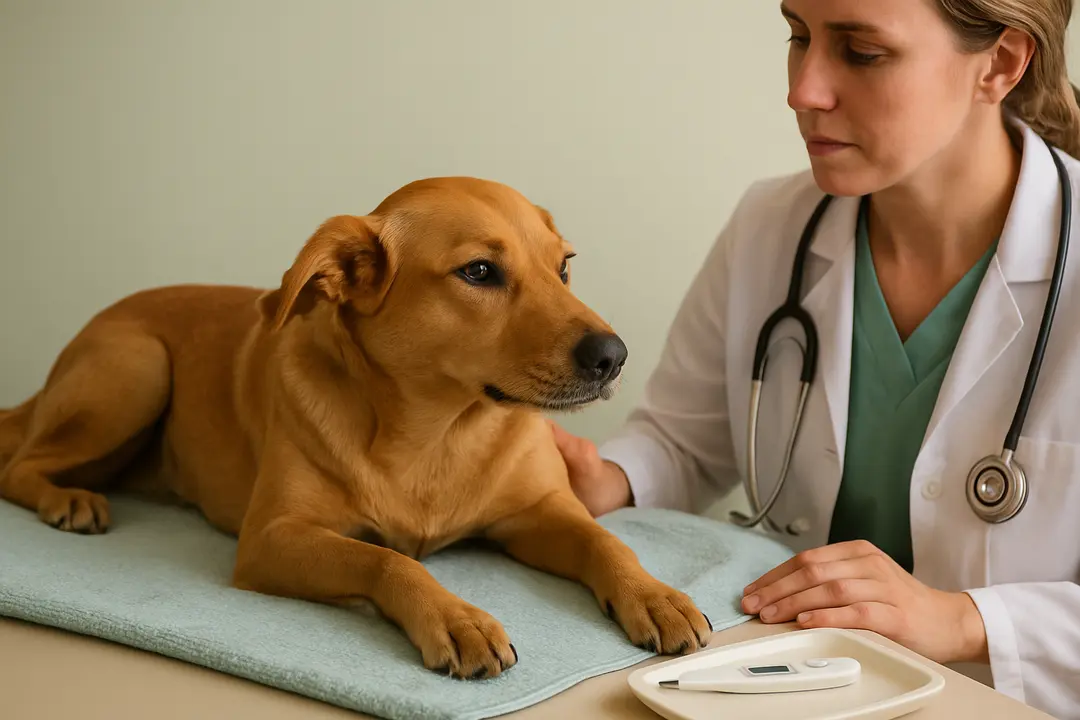
Choose a digital thermometer suitable for rectal use and label it for your dog. A helper can gently steady your dog while you handle the thermometer. If you’re unsure how to position it, ask your clinic to show you. It’s common for a dog who stands quietly at the clinic to be less willing at home. You don’t have to overcome that resistance to get a number.
- Prepare before lifting the tail. Have the thermometer and water-soluble lubricant within reach. Turn the thermometer on and lubricate the tip so you won’t need to keep your dog still while you look for supplies.
- Make sure your dog is comfortable. Ask your helper to steady your dog gently. Lift the tail slowly. If your dog twists away or won’t let you touch the area, stop and leave the measurement to the clinic.
- Gently insert the lubricated tip into the rectum. Never push against resistance. Keep hold of the thermometer the whole time. If your dog starts struggling, gently remove it rather than trying to hold your dog more tightly.
- Wait for the digital signal, then remove the thermometer and read the display. Write down the number, whether it’s in °F or °C, and the time. Clean the thermometer according to its instructions and store it separately from the family’s thermometers.
The American Kennel Club’s temperature-taking guide describes choosing a thermometer and handling your dog gently. If you have to stop before it signals, tell the clinic you couldn’t get a reading. That’s more useful than reporting an unfinished measurement as normal.
Dog temperature chart: when to recheck, call, or go in
Compare the number with what your dog was doing when you took it. For example, 103°F (39.4°C) in a comfortable dog who was excited a moment ago calls for a different next step than 103°F in a dog who has been resting quietly and won’t eat.
| What you find | What to do next |
|---|---|
| 100–102.5°F at rest | This is the usual range. If your dog seems ill, call about the symptoms rather than assuming the number rules out a problem. |
| Slightly high, such as 103°F, right after excitement or play | Only if your dog looks well, is breathing comfortably, and you have no concern about overheating, allow about 10 minutes of quiet rest. Recheck once if it’s safe. |
| Above 102.5°F at rest, or still high after that quiet recheck | Call your vet and report the reading. At 104°F (40°C), call right away rather than trying another rest period. |
| Above 104°F or below 99°F (37.2°C) | Seek veterinary care right away. If your usual clinic cannot see your dog promptly, go to an emergency veterinarian. Don’t keep measuring while you wait for a different result. |
VCA’s guide to taking a pet’s temperature describes the quiet recheck after excitement. It’s a way to interpret a slight rise in an otherwise well dog, not a test for heatstroke. The Schwarzman Animal Medical Center’s fever guide recommends discussing elevated temperatures with a veterinarian. You don’t have to wait for a reading of 104°F to make that call.
What to tell your vet, and what to do while you wait for advice
Lead with the change that worries you most. If your dog is having trouble breathing, say that first. If the concern is a high temperature in a dog who otherwise looks comfortable, give the number and say whether your dog was resting. These details help the clinic put the reading in context:
- The measurement: the exact temperature and unit, how and when you took it, and the result of one quiet recheck if you did one.
- What came before it: recent play, excitement, strenuous exercise, or time in the heat. If you started cooling your dog, tell the clinic what you did.
- How your dog is acting now: changes in breathing, alertness, walking, or appetite; whether you noticed shivering; and which change you saw first.
- Any medicine already given: have the package available so you can give the clinic the name rather than guessing from the pill’s appearance.
Your clinic can take a temperature if you couldn’t do so safely and assess it alongside your dog’s symptoms. If your vet recommends watching at home, ask whether they want another reading, when to take it, and which changes should prompt another call. A falling number is only part of the picture: if your dog still seems unwell, report what you’re seeing.
Don’t give ibuprofen, acetaminophen, or another pet’s prescription to bring a fever down. The FDA’s guide to pain relievers for pets explains why human medicines can harm dogs. If you already gave one, contact your veterinarian or an animal poison control service now, even if your dog looks normal. The ASPCA’s poisoning guidance recommends having the packaging and exposure details ready. Do not try to make your dog vomit unless a veterinarian directs you to.
Talk it through with Vicky
If your dog is stable, you can tell Vicky what you’re seeing right now, including the reading, whether your dog was resting, and what first caught your attention. Vicky will bring in Dr. Andy (Virtual DVM), our AI specialist in general veterinary practice, to help you sort through those details. Chat is not a substitute for urgent care: if your dog has emergency signs, go directly to an emergency veterinarian.
Common questions
Can I use a regular digital thermometer, or do I need a pet ear thermometer?
You can reserve a regular digital thermometer suitable for rectal use for your dog; you don’t need to buy an ear thermometer for this check. The ranges in the chart are for rectal readings. If you took an ear reading, tell the clinic which method you used.
What if I’m alone and my dog won’t stay still, even for a treat?
Skip the home check rather than trying to hold your dog still and insert the thermometer at the same time. Call the clinic with what you can observe, such as a change in appetite, breathing, or alertness. The team can take the temperature there if needed.
My dog’s temperature came down after a walk. Does that rule out heatstroke?
No. If your dog had excessive panting, drooling, weakness, or confusion after heat exposure, don’t use a later reading to cancel a trip for suspected heatstroke. Continue to the emergency hospital and report the signs you saw before cooling.
What if my dog’s fever comes back while they’re taking prescribed medicine?
Call the prescribing clinic with the new resting temperature, the time you took it, and how your dog is acting compared with the last visit. The reading alone doesn’t explain why it rose again. Ask the clinic what to do next rather than adding a fever reducer yourself.
Sources
- Merck Veterinary Manual — Initial Triage and Resuscitation of Small Animal Emergency Patients
- VCA Animal Hospitals — Taking Your Pet’s Temperature
- Schwarzman Animal Medical Center — Fever in Dogs and Cats
- American Kennel Club — Fever in Dogs: Signs, Symptoms, Treatments
- PetMD — How to Take a Dog’s Temperature
- Cornell University College of Veterinary Medicine — Heatstroke: A Medical Emergency
- PDSA — Heatstroke in Dogs
- US Food and Drug Administration — Get the Facts about Pain Relievers for Pets
- Evaluation and Initial Treatment of Dog and Cat Emergencies
- How to Take Your Dog's Temperature: Methods, Tools and More
- What to Do if Your Pet Is Poisoned