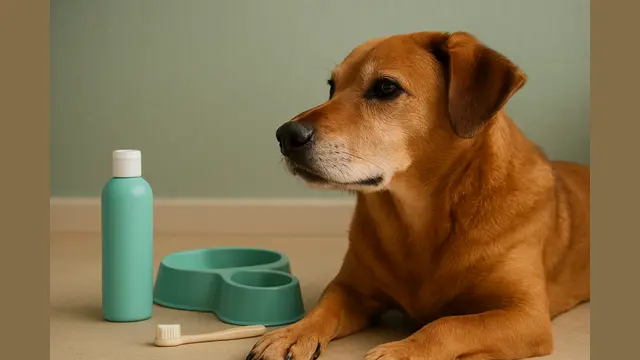
How long does a professional dental cleaning take for a dog, and when can my dog come home?
Plan for about an hour of cleaning but a morning-to-afternoon clinic visit. Learn what can change pickup time and how your vet decides your dog can go home.

In this guide (7 sections)
- How long is the cleaning compared with the whole visit?
- What to settle at morning drop-off
- Why the vet might call about a tooth extraction
- What if the expected update time passes?
- What the team checks before your dog can come home
- What to ask at pickup and watch for that evening
- Talk it through with Vicky
Banfield Pet Hospital estimates about one hour for the cleaning itself, but plan for your dog to spend much of the day at the clinic. For a routine cleaning, you can usually expect a morning drop-off and a same-day pickup, often in the afternoon. Keep your ride flexible until the team confirms that the dental work is finished and your dog has recovered enough from anesthesia to go home.
How long is the cleaning compared with the whole visit?
If you hand over the leash at 8 a.m., that doesn't mean your dog goes under anesthesia at 8 a.m. There are three different times you might hear about when you book a professional dog teeth cleaning:
| Which time? | What it means for your dog |
|---|---|
| Cleaning time | About an hour is a planning estimate for cleaning the teeth, not a deadline for finishing all the dental work. It doesn't account for an unexpected tooth extraction. |
| Time under general anesthesia | Your dog is unconscious for the detailed mouth exam, dental X-rays, cleaning, and any treatment the vet performs during that procedure. Ask for an estimate specific to the work your vet expects. |
| Time at the clinic | This runs from check-in to pickup. It includes the assessment before anesthesia and supervised recovery afterward. Use this estimate to plan your day. |
For a concrete example, the University of Tennessee's veterinary dentistry service requests arrival by 7:30 a.m. and usually discharges patients between 3:30 and 4:30 p.m. That's an eight- to nine-hour visit at that hospital, not eight to nine hours of dental work. Your clinic may have a different schedule, so ask for its usual pickup window before arranging a ride.
What to settle at morning drop-off
Before the cleaning, the team assesses your dog for anesthesia. Banfield, for example, describes a physical exam and pre-anesthetic blood tests. These checks give the vet information to use in planning your dog's care; they aren't a guarantee that anesthesia is risk-free.
Check-in is also your chance to make sure the team can reach you. Before you leave:
- Mention anything that didn't go to plan. If your dog ate despite instructions not to, or you're unsure whether a usual medicine was given, tell the team what happened and when. Let the vet decide whether that changes the plan.
- Agree on what you're authorizing. Ask which decisions the vet can make during the procedure and which ones need a call to you. If you want to discuss any tooth removal first, say so now.
- Ask when to expect news. Find out whether the team normally calls after the dental work, when your dog is ready for pickup, or at both points. Give a number you'll be able to answer and mention any stretch of the day when you'll be unavailable.
Why the vet might call about a tooth extraction
A tooth can look unremarkable during an awake exam but need a closer look under the gum. Under anesthesia, the vet can examine each tooth, use a small probe to measure the space between the gum and tooth, and take dental X-rays to see what's hidden from view. Texas A&M's veterinary dentistry service uses probing and full-mouth X-rays to determine what treatment is needed. The cleaning itself removes buildup above and below the gumline, and the teeth are polished.
Suppose you dropped your dog off for a cleaning and the vet calls to discuss removing a tooth. That call can mean the exam revealed disease that wasn't visible before, rather than that something went wrong during the cleaning. VCA's guide to dental cleaning in dogs explains that the vet may recommend removing a diseased tooth during the same procedure or at a later appointment.
Start with two questions: “What did you find on the exam or X-ray?” and “Why do you recommend treating it today or bringing my dog back?” Once you understand the choice, ask whether it changes the pickup plan. An extraction doesn't automatically mean an overnight stay. The extent of the work and the care your dog needs afterward matter more than the word extraction alone.
What if the expected update time passes?
Call your clinic if the agreed update window passes without news. The clock alone can't tell you whether your dog is waiting for the procedure, having dental work, or waking up afterward. It's reasonable to ask which stage your dog is in and when the team expects to know more.
If you're coordinating a ride, distinguish an update from a pickup confirmation. A call saying the last tooth has been treated may be good news, but it doesn't necessarily mean you should set out. Ask, “Are you ready for me to come in, or will you call again after recovery?” If someone else is collecting your dog, arrange for that person to receive the discharge instructions, too.
What the team checks before your dog can come home
Waking up is part of recovery, not the only test for going home. The American Animal Hospital Association's 2011 anesthesia guidelines describe monitoring through recovery. The American College of Veterinary Anesthesia and Analgesia's 2025 monitoring update also covers observation during this period. The team checks how responsive your dog is, how comfortably they're breathing, their body temperature, and whether their pain is controlled well enough for care at home.
If pickup moves later, ask what the team is watching for. A dog who is awake may still need help staying warm or more time for the team to assess comfort. If the vet recommends an overnight stay, ask what care your dog will receive and when to expect the next assessment. Some dogs need continued observation or pain management after extensive dental work. That's a different plan from waiting another hour for routine discharge, and your clinic can explain which applies.
What to ask at pickup and watch for that evening
Start with what was actually done, rather than the plan you discussed that morning. Ask the team to show you which teeth, if any, were removed and to note any treatment still to be scheduled. Get the instructions for food, water, and any prescribed pain medicine in writing. Before you leave, make sure you know whom to contact if a question comes up after closing.
Ready to go home doesn't necessarily mean back to usual. Ask how alert your dog is now and what the team expects to change by bedtime. If you're concerned later, that gives you a useful comparison. Instead of saying only that your dog seems sleepy, tell the clinic whether your dog responds when you speak, how their breathing looks, and what's different from pickup. Include when your dog came home and whether any teeth were removed.
Go directly to an emergency veterinary clinic if your dog won't respond, is struggling to breathe, or is bleeding heavily. Don't wait for a routine callback or assume an unresponsive dog needs to sleep off the anesthesia. Both Cornell's emergency care service and the Merck Veterinary Manual's guide to pet emergencies identify these signs as reasons for immediate care.
Talk it through with Vicky
If a finding or a change in pickup time has left you unsure what to ask, you can tell Vicky what you're seeing right now. Vicky will bring in Dr. Theo (Virtual DVM, DAVDC), our AI specialist for dentistry and oral surgery, to help you prepare questions. That's a virtual role, not a consultation with a human veterinary dentist. Your dog's own clinic will confirm when it's safe to leave.
Common questions
Should my dog eat, drink, or take their usual medication before drop-off?
Ask your clinic for instructions before procedure day. Confirm the food cutoff, whether your dog may have water, and what to do about each usual medicine. Don't guess about giving or skipping a medication.
What if I can't answer my phone while my dog is having dental work?
Tell the clinic before drop-off and ask whether you can name another person to discuss treatment decisions. Agree on what the team should do if the vet finds a tooth that may need removal and can't reach you.
Do I need to stay home with my dog that evening or take the next day off work?
Tell the team how long your dog would be alone and ask what supervision to arrange. Confirm the plan at pickup, when the vet knows what work was done and how your dog is recovering.
When can my dog eat again, and is soft food needed after a tooth extraction?
Ask the clinic to write down when to offer the first meal, what texture to use, and how long to follow that plan. Use the instructions for the teeth treated at this visit rather than assuming the feeding plan from a previous cleaning still applies.
Sources
- Banfield Pet Hospital — Professional Dental Cleanings for Cats and Dogs
- University of Tennessee College of Veterinary Medicine — What to Expect for Dentistry & Oral Surgery
- VCA Animal Hospitals — Dental Cleaning in Dogs
- Texas A&M Veterinary Medical Teaching Hospital — Dentistry
- American Animal Hospital Association — AAHA Anesthesia Guidelines for Dogs and Cats
- Cornell University College of Veterinary Medicine — Emergency and Critical Care
- Merck Veterinary Manual — Evaluation and Initial Treatment of Dog and Cat Emergencies
- American College of Veterinary Anesthesia and Analgesia — 2025 Small Animal Anesthesia Monitoring Guidelines update
- MSD Veterinary Manual — Evaluation and Initial Treatment of Dog and Cat Emergencies