What can I safely do for my dog's hot spot, and when should a vet examine it?
Learn how to rinse and protect a new hot spot on your dog, when to stop home care, and which signs call for your regular vet or an emergency clinic.
In this guide (7 sections)
If your dog feels well and lets you see a small, shallow, wet patch that’s new and not spreading, stop the licking with a cone, gently rinse the skin with sterile saline or clean lukewarm water, and pat it dry. Arrange a vet exam if the sore has been there for about 24 hours; seek care sooner if it’s spreading, getting hotter or more swollen, draining more, or causing marked pain. A hot, painful lump needs urgent veterinary care even if it has burst.
Can this wait for your regular vet?
A raw, wet patch suggests a hot spot, also called acute moist dermatitis, but appearance alone doesn’t tell you what’s happening beneath the skin. Use both the change in the sore and how your dog feels to choose your next step.
| What you notice | What to do |
|---|---|
| The patch is new, small, and flat. You can see its edges, your dog is acting normally, and it isn’t getting bigger. | Brief first aid is reasonable. Contact your regular vet for advice during office hours and compare the spot again later today. |
| The red area is spreading over hours, the skin is getting hotter or puffier, fluid or pus is increasing, or your dog is too sore to let you look. | Call your regular vet for a same-day exam. If the clinic is closed, call an urgent or emergency veterinary clinic for guidance rather than waiting for it to spread further. |
| There’s a distinct hot, painful swelling, or there was a lump that opened and released foul-smelling pus. | Seek care now for a possible abscess. If your regular vet is closed, go to an emergency veterinary clinic, even if the lump looks smaller after draining. |
An abscess is a pocket of infection, not just irritated skin. Banfield’s guide to skin lumps describes how painful these swellings can be. If your dog is low on energy or refusing food along with the swelling, don’t wait to see whether cleaning it perks your dog up. As VCA explains about abscesses, the pocket may still need to be drained and flushed by a vet after it opens. Don’t squeeze it.
Is the eye involved? A sore on the cheek and a problem with the eye are different concerns. A swollen eyelid, squinting, or holding the eye shut is a reason to seek a veterinary eye assessment in its own right. You don’t need to see the swelling increase first. VCA’s guide to eye problems also identifies tearing with red skin around the eye as a sign to have examined.
How to check the patch without hurting your dog
Look in good light while your dog is comfortable. If the hair parts easily, look for where the raw skin ends and normal skin begins. For example, what looks like a coin-sized damp tuft on a leg may have a wider patch of sore skin underneath. If the fur is matted and you can’t see an edge, the size of the mat isn’t a reliable measure of the sore.
Look for swelling without pressing on it. If your dog flinches, cries, growls, or turns to guard the area, stop. Even a dog who normally accepts handling may try to bite when a sore hurts. You don’t need to pull apart a mat or test how tender the skin is. Telling the clinic “I can’t see the edges, and it hurts when I move the hair” is more useful than forcing another look.
Safe first aid for a small, new hot spot
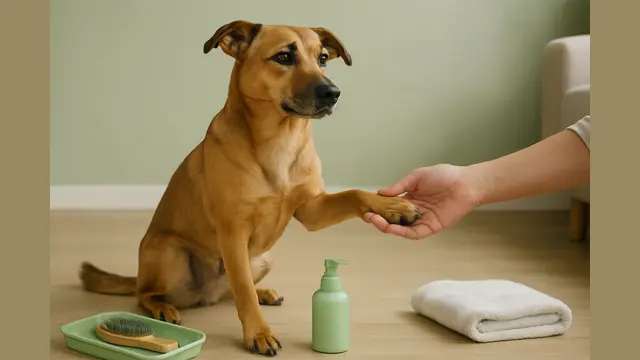
- Prevent licking and chewing first. Put on a recovery cone, also called an Elizabethan collar, and watch your dog turn toward the sore. If the tongue or teeth can still reach it, the cone isn’t doing its job. Ask your clinic for help with the fit. A cone protects the skin from further licking; it doesn’t treat a deeper problem or remove the reason your dog started licking.
- Rinse the visible skin gently. Use plain sterile saline or clean lukewarm water. Let it flow over the patch rather than scrubbing with a cloth. If water is what you have, you don’t need to buy a special wash before giving first aid. Follow PDSA’s guidance for rinsing a small wound: continue only as long as your dog tolerates it. If rinsing causes marked pain, stop and seek veterinary help.
- Pat the area dry. Blot gently and keep the coat dry. Leave a scab in place. If hair is stuck to the sore, leave clipping to the clinic rather than trying to slide scissors between the mat and skin you can’t see.
- Keep the first aid simple. Don’t use hydrogen peroxide, rubbing alcohol, or tea tree oil on the raw skin. Don’t improvise a tight bandage to block licking; an incorrectly applied wrap can cut off circulation. VCA’s wound care guide explains which cleaners and dressings to avoid. Ask your vet before giving any medicine, including antihistamines or pain relievers.
How long should you watch a hot spot at home?
Note when you first noticed the sore, not just when you cleaned it. Take a photo if you can do so without handling painful skin. Later today, look from the same angle. Useful signs are an edge that hasn’t spread, skin that’s less red and wet, and a dog who seems less bothered by it. A dry coat immediately after blotting tells you less than a comparison a few hours later.
Count from when the sore began. If you first saw it yesterday morning, putting on a cone this evening doesn’t start a fresh day of observation. Cornell’s hot spot guidance limits home care to a new, uncomplicated spot. Arrange an exam once the sore has been present for about 24 hours. If you don’t know how long it was hidden under the coat, ask your clinic rather than assuming it started today.
A scab can be part of healing, but it doesn’t outweigh worsening signs around it. Leave it alone and look at the surrounding skin instead: is the redness receding, or is swelling building at the edges? Increasing redness, heat, swelling, pain, or drainage is a reason to stop monitoring and call, whatever time you first noticed the spot.
What a vet can find that you can’t see at home
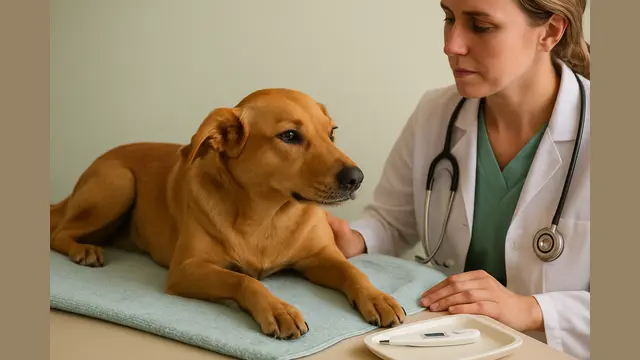
Your vet can clip the coat to expose the full patch, clean it, and check whether the inflammation is limited to the surface. A red, weeping sore isn’t necessarily infected. The reverse matters, too: a sore that looks shallow can involve deeper skin, particularly on the side of the face. Clinician’s Brief explains why the depth of a hot spot matters: it can change which tests and treatment your dog needs.
Treatment may include relief for itch and inflammation. It doesn’t automatically include an antibiotic. When you call, give the location, when you first saw the patch, whether it started as a lump, and what has changed. Mention anything you applied and whether the cone actually prevents licking. If hair hides the sore, say so; the clinic doesn’t need you to shave it before the visit.
If hot spots keep coming back
Hot spots can happen despite careful care. Think about what happened before the licking started. Does the coat stay damp in the same place after swimming? Does your dog scratch at one ear before a sore develops nearby? Trapped moisture, fleas, allergies, ear trouble, and anal gland problems can all contribute. A recurring pattern gives your vet somewhere to start, but it doesn’t prove the cause.
For the next visit, a note about where each patch appeared and what your dog was doing beforehand may be more useful than a list of different skin products you’ve tried. PDSA’s guide to hot spots in dogs describes the two parts of care: protecting and treating the sore, and addressing what made your dog bother that skin in the first place.
Talk it through with Vicky
You can tell Vicky what you’re seeing right now, including how long the patch has been there and whether it’s flat or swollen. Vicky will bring in Dr. Nadia (Virtual DVM, DACVD), our AI specialist in veterinary dermatology, to help you organize your observations and questions. If your dog needs same-day or emergency care, contact your own vet or emergency clinic directly.
Common questions
Can I use Neosporin, hydrocortisone, or a pet-store hot spot spray?
Some antibiotic or hydrocortisone creams may be appropriate for a small, uncomplicated hot spot, but they aren’t needed for an initial rinse. If you’re considering a cream or spray, give your vet the exact product name and describe the sore so they can advise whether that formulation fits. Don’t reuse antibiotics prescribed for an earlier illness.
Can the cone come off once the hot spot has a scab?
A scab alone isn’t a reason to remove the cone. If your dog still tries to lick or chew the spot, it still needs protection. If your vet is treating the sore, ask what signs of healing they want to see before the cone comes off.
How can I tell a hot spot from a bite, ringworm, or another skin problem?
The shape of a bald patch, or whether it looks wet or dry, isn’t enough to settle that at home. Tell your vet if you saw a bite or noticed a painful lump before the skin opened; that history points to a different concern than licking at a flat, itchy patch.
Why does my dog get a sore under the collar after swimming?
The coat beneath the collar may stay wet even when the surrounding fur feels dry. Check and gently dry that area after swimming. If sores keep returning there, tell your vet about the pattern rather than assuming moisture is the only trigger.
Sources
- Hot spots — Cornell University College of Veterinary Medicine
- Hot Spots in Dogs: What are they and how are they treated? — Schwarzman Animal Medical Center
- Wound care dos and don’ts — VCA Animal Hospitals
- First aid for wounds, cuts and grazes — PDSA
- Acute Moist Dermatitis — Clinician’s Brief
- Urgent Care for Eye Issues — VCA Animal Hospitals
- Skin lumps, bumps, and masses — Banfield Pet Hospital
- Hot spots (acute moist dermatitis) in dogs — PDSA
- Pets and antibiotics — PDSA
- Abscesses in Dogs — VCA Animal Hospitals