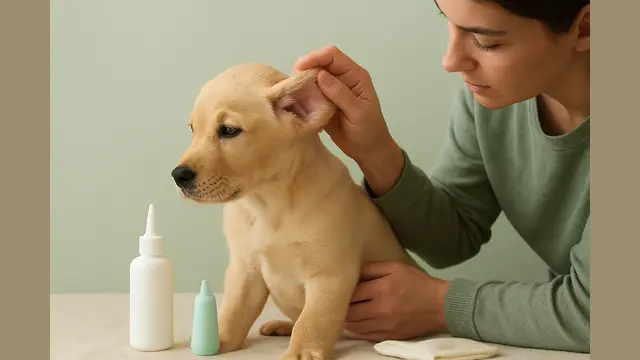
What is a hot spot on a dog, and how can I recognize one?
Learn to recognize a hot spot beneath wet or matted fur, check your dog without hurting sore skin, and decide how quickly to contact your veterinary clinic.

In this guide (7 sections)
- What an early hot spot looks like
- How to check under the fur without hurting your dog
- Why a small irritation can look much bigger by evening
- Is it a hot spot, ringworm, or a deeper infection?
- When to call your regular vet and when to seek urgent advice
- What to do before the visit and what to watch afterward
- Talk it through with Vicky
A hot spot is a patch of skin your dog has licked, chewed, or scratched raw. The first clue may be your dog returning to one place or a single wet tuft of fur covering moist, painful skin. If you find a sore, keep your dog from licking it and contact your vet; a small patch can grow within hours.
What an early hot spot looks like
You may notice the licking before you notice anything unusual about the skin. Your dog might keep turning to chew one hip or scratching the same side of the face. Look where that attention is focused. The face, neck, hips, and legs are common places for hot spots, but location alone doesn't tell you what a sore is.
Under the fur, you might see a red, raw patch with thinning or missing hair. The surface can ooze, and some areas may be scabbed. You don't need to see a round bald spot to suspect a hot spot. As the Schwarzman Animal Medical Center's guide to hot spots explains, sometimes all that shows through the coat is a clump of wet hair.
For example, a damp neck after a swim tells you little on its own. One tuft that stays stuck together as the rest of the coat dries is worth a closer look, especially if your dog keeps scratching there. Finding exposed, sore skin at the edge of that tuft tells you more than the wetness does. If you can't see the skin, don't assume the sore is no bigger than the tuft.
How to check under the fur without hurting your dog
- Watch before touching. Notice the exact place your dog is trying to reach. “On the left cheek, just below the ear” is more useful to your clinic than “somewhere on the head.” If your dog is also scratching the ear, note that separately rather than assuming the cheek is the only place that bothers them.
- Look from the edge. In good light, gently part loose fur beside the damp patch if your dog is comfortable. Look for bare or broken skin, swelling, and fluid coming from the sore. If only one edge is visible, that's enough. There's no need to press the skin to see whether it hurts.
- Let your dog's response set the limit. Stop if your dog flinches, cries, pulls away, or turns to bite. A painful response is useful information for the vet, even if you never get a clear view. Don't hold your dog still to finish the inspection.
- Leave tight mats in place. Don't slide scissors under clumped hair. A sudden movement can bring the skin into the path of the blades. The ASPCA's advice on matted coats recommends professional clipping when a mat doesn't come apart easily. With sore skin underneath, tell your vet what's hidden rather than trying to expose it yourself.
Why a small irritation can look much bigger by evening
Vets call a hot spot acute moist dermatitis: a wet, inflamed area of skin that develops quickly. Something irritates the skin, so your dog scratches or chews. That damages the surface, and now the sore itself bothers your dog. VCA's guide to hot spot first aid describes how repeated scratching or licking can turn a small irritation into a much larger wound during a single workday.
Fleas, allergies, and moisture held against the skin by a thick coat after swimming are common triggers, according to Cornell's guide to hot spots in dogs. A hot spot can happen even when you're careful about coat care. Think back to what you noticed before the sore: a swim, fleas in the coat, itching elsewhere, or repeated scratching near one ear. You don't have to work out which came first to give your vet useful clues.
Is it a hot spot, ringworm, or a deeper infection?
Moist, raw skin where your dog keeps chewing fits a hot spot. Ringworm and mange can also cause patches of hair loss, though those patches often look drier. Neither a round outline nor missing hair settles the question. Even a clear view of a sore can't tell you for sure what started the itch.
There's a second question that matters for treatment: how deep does the problem go? Bacteria can grow on the damaged surface without causing a deeper infection. The reverse is also possible. The Clinician's Brief overview of acute moist dermatitis notes that some cheek sores look shallow even though infection extends into the skin. That's why a photo or a glimpse under the fur can help you describe a patch but can't replace an exam.
When to call your regular vet and when to seek urgent advice
If you find a suspected hot spot and your dog otherwise seems comfortable, call your regular clinic to arrange an appointment. You don't need to wait for hair to fall out or for the patch to reach a certain size. If you can't see under a mat, say so when you call. Your dog doesn't need to tolerate a home inspection before you ask for help.
Call promptly today if the patch is getting bigger quickly, is large or very painful, contains pus, or is becoming more swollen or draining more fluid. Mention whether your dog seems unwell as well as how the skin looks. The PDSA guide to assessing wounds emphasizes pain, wound size, and your dog's overall condition. Increasing swelling or drainage can point to infection.
Those changes warrant prompt veterinary advice; swelling or drainage alone doesn't establish that your dog needs an emergency visit. If your regular vet is closed and the sore is worsening or your dog is very painful, call an urgent or emergency veterinary clinic for guidance on whether to come in now. Lead with the change that concerns you most: “The raw area is wider than it was at breakfast, and now my dog cries when I get near it.” That's more useful for deciding how soon to see your dog than trying to name the skin condition.
What to do before the visit and what to watch afterward
While arranging care, interrupt the licking or chewing if you can. A recovery cone, also called an Elizabethan collar, can keep your dog's mouth away from the sore. Watch whether it actually blocks access to this patch. Ask your vet before using any human medicine on the skin or giving your dog anything for pain or itching.
At the visit, your vet can examine the area the fur has hidden, assess whether the damage appears limited to the surface, and look for a reason your dog keeps bothering that spot. Mention if it has happened before. A sore that returns below the same ear is a different clue from sores in several places after swims, even if they look alike. Ask what to do about the suspected trigger as well as how to care for the current patch.
Once treatment starts, watch the skin and your dog's behavior together. Is the visible area getting smaller or wider? Is there less drainage, or more? Is your dog leaving it alone more often or still trying hard to reach it? Report worsening pain, swelling, or drainage rather than waiting for a scheduled follow-up. If the sore isn't healing despite treatment, the PDSA hot spot guide recommends booking a recheck.
Talk it through with Vicky
You can tell Vicky what you're seeing right now, even if all you can describe is where the fur is damp and how your dog reacts. Vicky will bring in Dr. Nadia (Virtual DVM, DACVD), our AI veterinary dermatology specialist, to help you make sense of those observations and prepare questions for your vet.
Common questions
Can my other dog or someone in my family catch a hot spot?
“Hot spot” describes the raw skin left by scratching or licking, not a particular germ. Because other skin conditions can look similar, the patch's appearance can't tell you whether its underlying cause can spread.
Does an oozing hot spot mean my dog needs antibiotic cream?
Oozing alone doesn't tell you which treatment your dog needs. Bacteria may be present on the surface without a deeper infection. Let your vet assess the patch before applying a human antibiotic cream or other medication.
Could my dog's collar be causing a sore that keeps coming back after swimming?
Moisture trapped against the skin after a swim can be a trigger, especially in a thick coat. Tell your vet whether the patch sits beneath the collar and whether it also appears when your dog hasn't been swimming. Its location is a clue, not proof that the collar caused it.
What if the recovery cone touches the hot spot on my dog's neck?
Tell your clinic where the cone's edge rests and whether your dog can still reach the sore. Ask for help choosing a fit that blocks licking without rubbing the painful area.
Does a scab mean the hot spot has healed?
Not by itself. A hot spot can be scabbed and still be sore. If the surface looks drier but your dog seems more painful or the skin is more swollen, report those changes to your vet.
Sources
- Acute Moist Dermatitis — Clinician’s Brief
- Hot spots — Cornell University College of Veterinary Medicine
- First aid for wounds, cuts and grazes — PDSA
- Hot Spots in Dogs: What Are They and How Are They Treated? — Schwarzman Animal Medical Center
- First Aid for Hot Spots in Dogs — VCA Animal Hospitals
- Hot Spots (Acute Moist Dermatitis) in Dogs — PDSA
- Hot Spots on Dogs: Causes, Treatment, and Home Remedies — PetMD
- A Haircut Could Save a Life: Preventing Your Pet’s Coat from Matting — ASPCA
- When to Go to the ER — Cornell University Riney Canine Health Center