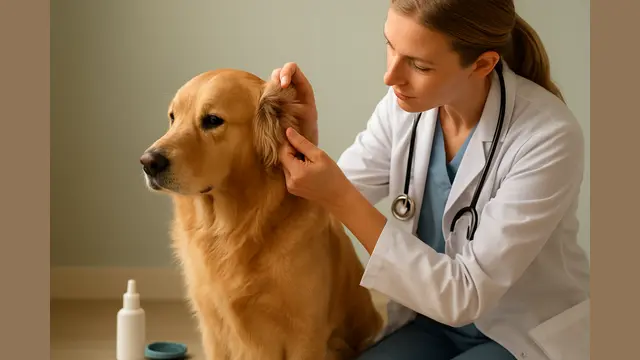
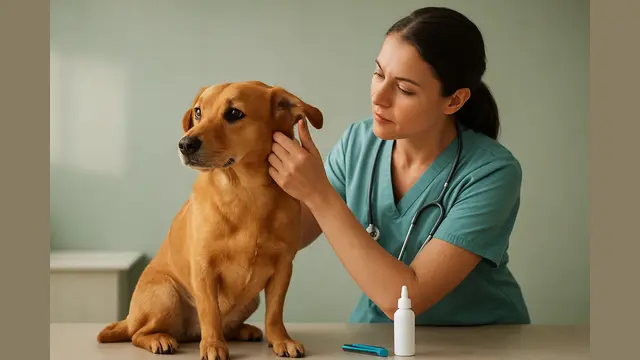
Why are my dog's teeth chattering, and when could it be a sign of pain?
Learn how to tell excitement from painful chewing, spot signs of mouth pain in a dog that still eats, and decide when jaw chattering needs veterinary care.
In this guide (7 sections)
- Does the chattering start before the first bite or during chewing?
- How to spot mouth pain in a dog that still eats
- What can hurt, and what else could cause the jaw to chatter?
- What to do during an episode
- When to monitor, call your vet, or get urgent help
- What your vet can check below the gumline
- Talk it through with Vicky
A brief burst of teeth chattering during an excited greeting, after a sniff, or while your dog is shivering is less concerning if it stops when the trigger passes and your dog is otherwise acting normally. Pain is more likely when the clicking starts as your dog bites down, especially if they drop food, chew on one side, or pass up a favorite crunchy treat. Call your veterinarian if you notice those changes or if the chattering keeps returning without a clear trigger.
Does the chattering start before the first bite or during chewing?
Picture a dog whose teeth click as you scoop dinner into the bowl. Once the bowl is down, the clicking stops, and the dog eats at their usual pace. Now picture a dog who waits quietly for dinner but chatters after picking up kibble, lets a piece fall, and moves the next mouthful to one side. Both dogs might finish dinner. The first pattern fits anticipation; the second is a reason to have the mouth checked.
The same distinction helps away from the food bowl. Gentle chattering can go with excitement or investigating a scent, as SPCA New Zealand describes for greyhounds. Notice what happens after the greeting ends or your dog walks away from the smell. A familiar quiver that ends there is different from clicking that starts again later while your dog is resting. A dog can have a long-standing greeting habit and still develop a sore tooth.
How to spot mouth pain in a dog that still eats
If your dog is comfortable enough to eat, watch them with their usual meal. There's no need to offer something hard to test a tooth. How your dog handles the food tells you more than an empty bowl. Look for changes from their own habits:
- Slower chewing: Your dog comes to the bowl eagerly but takes longer to finish. Notice whether the pauses begin once there's food in their mouth.
- Dropped pieces or one-sided chewing: Your dog picks up food, lets it fall, or repeatedly shifts it to the same side. Tell your vet what you saw rather than trying to work out which tooth hurts.
- A change in texture preference: Your dog finishes soft food but leaves kibble or a crunchy treat they used to enjoy. Report both parts of that observation, not just that they're still eating.
Away from meals, look for new drooling, bad breath, blood at the gums, a visibly broken tooth, or swelling over one cheek. You don't need to pull the mouth open to make the call. PDSA's guide to dental disease explains why dogs can keep eating despite painful teeth or gums. Even a careful owner can miss the problem when appetite is the one thing that hasn't changed.
What can hurt, and what else could cause the jaw to chatter?
A fractured tooth, inflamed gums, or an abscess (a pocket of infection) around a tooth root can make chewing hurt. A sore or growth inside the mouth or an injury to the joint that opens and closes the jaw can cause discomfort, too. Chattering doesn't distinguish among them. If you noticed a broken tooth or saw your dog injure their jaw, that detail is more useful to your vet than how loud the clicking sounded.
Cold is another possible explanation when the teeth tap as the whole body shivers. Note whether you actually saw shivering and whether your dog was back to their usual self out of the cold. If the chattering keeps happening indoors when your dog isn't shivering, tell the clinic about those episodes separately.
Nausea or reflux, when stomach contents come back up, can also accompany chattering. Mention vomiting or food coming back up if you saw it around the same time. Repeated jaw clacking with twitching of a lip, ear, or eyelid raises a different possibility: a focal seizure, which can affect movement in one part of the body without loss of consciousness. Cornell's guide to seizures in dogs describes these localized movements. A single click on its own doesn't establish that your dog had a seizure.
What to do during an episode
- Check the time and note what your dog was doing. “The tapping started after the first mouthful” is more useful than “it happened at dinner.” If you aren't sure it's chattering, describe what you see: rapid contact between the teeth, a quivering jaw, or a grinding movement.
- Keep the area safe. During a possible seizure, move nearby objects your dog could hit. Don't restrain your dog, hold the jaw still, or put your hands in the mouth. PDSA's seizure first-aid guide explains how to protect your dog without holding them down.
- Film from a safe distance if you can. Include the face and enough of the body to show whether anything else is moving. Note whether your dog seems aware of you, without reaching toward their face to test them. Don't delay a call for help to get a recording.
- Note when it stops and what happens next. Did your dog go straight back to sniffing, pause over the bowl, or act differently afterward? If the movement returns, record the time of that episode too. The sequence before, during, and after helps your vet interpret a clip that might show only a few seconds.
When to monitor, call your vet, or get urgent help
Monitor a brief, familiar episode if it has an obvious trigger, stops when the trigger passes, and your dog returns fully to normal. At the next usual meal, pay attention to chewing rather than appetite alone. You don't need to recreate the episode.
Call your veterinarian about painful eating or unexplained recurrence. A brief bout still warrants a call if your dog starts dropping food, has bleeding gums or a swollen cheek, or you can see a damaged tooth. Don't wait for them to stop eating. Ask your vet before giving any pain medicine, including a human pain reliever or medication left over from another dog's prescription.
Call promptly after a first suspected seizure, even if it has stopped. If a suspected seizure is continuing or another follows soon afterward, contact an emergency veterinarian now. A seizure lasting five minutes needs immediate treatment; five minutes is not a waiting period before you can call. Tell the clinic whether the movements are still happening and whether your dog recovered between episodes. The University of Illinois guide to suspected seizures explains why duration and recovery matter.
If the jaw movement follows a serious accident, describe the injury to the emergency clinic first. Report trouble breathing, loss of consciousness, or heavy bleeding before describing the clicking. Follow the clinic's instructions rather than stopping to inspect the teeth. The Merck Veterinary Manual's emergency guide explains what the emergency team checks first.
What your vet can check below the gumline
Your veterinarian can examine the teeth, gums, and jaw and compare those findings with what you've noticed at home. If a tooth looks normal from the outside, its root is still out of view. As VCA's guide to dental pain explains, a thorough exam under anesthesia and dental X-rays can reveal disease beneath the gums. That's why a change in chewing is worth reporting even when you can't point to a damaged spot.
Treatment depends on the finding. For example, if a fracture exposes the pulp, the sensitive tissue inside a tooth, the usual options are a root canal to treat the inside of the tooth or removal of the tooth. If your vet suspects a cause outside the mouth instead, the timing of any stomach upset or facial twitching can guide the next assessment. Before you leave, ask what eating changes to watch for and what to do if the chattering returns.
Talk it through with Vicky
You can tell Vicky what you're seeing right now, including whether the clicking starts while your dog waits for food or after the first bite. Vicky will bring in Dr. Theo (Virtual DVM, DAVDC), our Veterinary Dentist & Oral Surgeon, to help you sort through signs of mouth pain and what to tell your veterinarian.
Common questions
Why does my dog's jaw chatter after sniffing another dog's urine?
Some dogs briefly chatter their teeth in response to that particular scent. If your dog moves on and behaves normally, the timing fits a scent response better than painful chewing. Clicking that also happens at meals or at rest deserves a separate look.
My older greyhound just started chattering in a warm room. Should I book an exam?
Yes, if it's new and keeps happening without a clear trigger. Describe what your dog is doing when it starts; a breed's familiar excitement behavior doesn't explain a new pattern at rest.
Could a tooth still hurt after an awake dental cleaning?
Yes. Clean visible surfaces don't tell you what's happening around a tooth root. If chewing has changed, tell your vet when the cleaning took place and ask whether a dental exam under anesthesia and X-rays would help.
What if I missed the start of the chattering and didn't get a video?
Tell your vet how long you actually watched it rather than guessing the full duration. Describe what moved, whether your dog seemed aware of you, and what happened afterward. You don't need to wait for another episode to call.
Sources
- Frequently asked questions about living with greyhounds — SPCA New Zealand
- Teeth Chattering in Dogs: Causes and Treatment — American Kennel Club
- Teeth Chattering in Dogs — Veterinary Partner
- Dental Pain in Dogs — VCA Animal Hospitals
- Fractured Teeth in Dogs — VCA Animal Hospitals
- Managing seizures — Cornell University College of Veterinary Medicine
- I Think My Pet Had a Seizure. Now What? — University of Illinois College of Veterinary Medicine
- Evaluation and Initial Treatment of Dog and Cat Emergencies — Merck Veterinary Manual
- Get the Facts about Pain Relievers for Pets — U.S. Food and Drug Administration
- PetMD — How Dogs Experience the World: Part 2
- PDSA — Dental Disease in Dogs
- PDSA — What to Do if Your Pet Has a Seizure