
Why does my dog keep shaking its head, and could it have an ear problem?
Learn what to check when your dog keeps shaking its head, why clean ears can still hurt, and when to call your vet or go straight to an emergency clinic.
In this guide (6 sections)
Yes, an itchy or painful ear is a common reason a dog keeps shaking its head. A brief shake after a bath or swim can clear water, but your dog should settle and stay comfortable. If the shaking keeps coming back, call your veterinarian for an ear exam, even if you see no redness or discharge.
Head shaking or a lasting head tilt? What to do now
Watch your dog between shakes. Does your dog flap its ears, then hold its head level and walk normally? Or does one ear stay tipped toward the floor even when your dog stands still? A lasting tilt is different from a shake, and whether your dog can stand and walk steadily changes what to do.
| What you notice | Your next step |
|---|---|
| A brief shake after getting wet, then no more shaking, pawing, or discomfort | Watch at home. There’s no need to put anything in the ear. |
| Shaking that keeps returning, even with a clean-looking ear | Call your regular vet to arrange an exam. Don’t wait for an odor or discharge to develop. |
| Shaking that hardly lets up, marked ear pain, or a newly puffy ear flap | Call your clinic today. If the shaking began suddenly on a grassy walk, mention that when you call. |
| A new head tilt that persists, even though your dog still seems steady | Call your clinic promptly about the tilt. Don’t wait for trouble walking before seeking advice. |
| A lasting head tilt with stumbling, falling, or difficulty standing | Go to an emergency veterinarian now. Skip the home ear check. |
Cornell’s guide to itchy ears explains that a sustained tilt with unsteady walking can point to trouble deeper in the ear. This veterinary guide to head tilt in dogs also identifies a persistent tilt with falling or difficulty standing as a reason for immediate evaluation.
Why your dog might keep shaking one or both ears
Water after a bath or swim. The useful clue isn’t only that your dog got wet; it’s what happens afterward. A dog that shakes on leaving the bath and goes back to resting is different from one that keeps getting up to shake and rub an ear. Moisture left in the canal can allow yeast or bacteria to grow. Texas A&M’s guide to canine ear infections describes why repeated shaking, rubbing, odor, redness, or pain deserves veterinary attention.
Allergies and outer ear inflammation. You may hear your vet say otitis externa. That means the outer ear canal is inflamed; it doesn’t tell you what started the irritation. For example, an allergy can make the canal itchy and inflamed, and then yeast or bacteria can overgrow. An allergy and an infection can therefore be part of the same problem. This can happen to a well-cared-for dog. It doesn’t mean you missed a cleaning.
Something stuck in the ear. If your dog suddenly starts shaking hard and pawing at one ear after a walk in tall grass, tell the clinic you’re concerned about a lodged grass seed. The timing is a clue, not proof. An object can sit out of sight and may need to be removed by your vet. Drops won’t remove it, and reaching for it with tweezers isn’t a safe way to find out whether it’s there.
Ear mites. Mites can cause signs that resemble an infection. They’re more common in puppies than in adult dogs, but age alone doesn’t settle the question. Dark ear debris is worth describing, not a reason to choose a mite remedy over infection treatment. VCA’s guide to outer ear infections explains why the vet checks the canal and eardrum before choosing what to put in the ear.
How to check your dog’s ears without probing
- Watch before you touch. Notice whether your dog paws at one ear, rubs one side of its head, or scratches both ears. Does the shaking stop completely or interrupt whatever your dog is doing? If you can’t tell which side hurts, say that rather than guessing. Your vet can examine both ears.
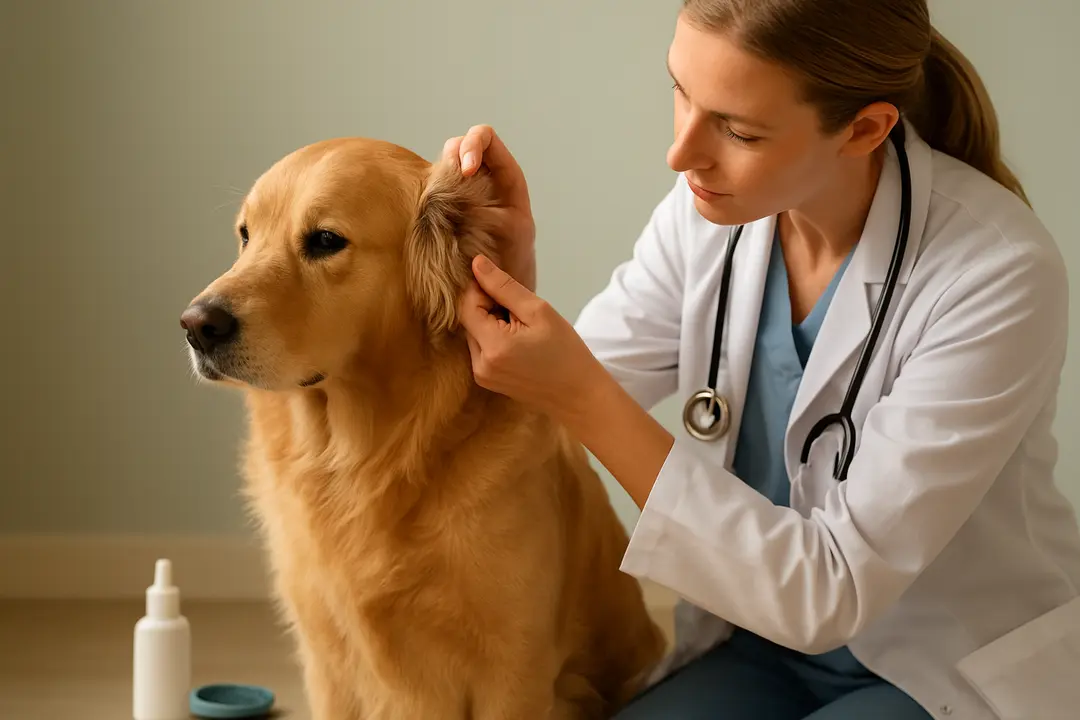
- Look at the flap and the visible opening. If your dog is comfortable with it, gently lift the flap. Compare the two sides for redness, swelling, fluid, or a buildup of debris, and note any unusual smell. If your dog pulls away, stop; there’s no need to prove the ear hurts. As this guide to repeated head shaking explains, you can’t rule out a problem farther down the canal by looking at the opening.
- Check whether the flap has changed shape. A new, soft bulge in the flap itself is different from debris in the canal. Forceful shaking or scratching can cause blood to collect inside the flap, making a pocket called an aural hematoma. The American College of Veterinary Surgeons’ guide to aural hematoma explains why early care addresses both the swelling and the irritation that set off the shaking. Leave the swelling alone rather than squeezing or trying to drain it.
Should you clean the ear before the appointment?
Keep the ear dry and leave the canal alone. Drying the outside of a comfortable ear after swimming is different from flushing a sore ear. If your dog is shaking, pawing, or pulling away in pain, call before cleaning. Peroxide and alcohol can irritate the canal, and a cotton swab can push debris deeper or injure the ear. VCA’s ear-cleaning instructions explain why an inflamed ear needs different care from a comfortable one.
Don’t use a homemade rinse or restart leftover drops, even if this episode looks like the last one. You can see the opening but not the eardrum. Certain drops can damage hearing if the eardrum is torn. That’s a different risk from the soft swelling that shaking can cause in the flap.
When you call, lead with the change you can describe most clearly: the flap puffed up this morning, for example, or your dog hasn’t stopped pawing since a walk. Say when it started, whether your dog holds its head level between shakes, and how steadily your dog walks. If you’ve already cleaned the ear or used drops, have the product name handy and tell the clinic whether the shaking started before or after you used it.
What the vet can find and what to watch for afterward
The exam answers two questions that a photo of the ear can’t. First, is there something in the canal, and what does the eardrum look like? Your vet can use an otoscope, a lighted instrument for looking into the ear, to check for a lodged object and assess the eardrum. Those findings help the vet decide whether something needs to come out and which ear treatments are safe to use.
Second, what’s in the ear debris? Your vet can take a small sample and look at it under a microscope for yeast, bacteria, or mites. You may hear this called ear cytology. The Merck Veterinary Manual’s guide to outer ear inflammation describes how this check complements the ear exam. The smell or color of discharge alone can’t give you the same answer.
Before you leave, ask what improvement to expect for your dog’s finding, whether to clean the ear during treatment, and when the clinic wants an update. At home, notice whether your dog can rest without getting up to shake, whether the pawing eases, and whether the flap stays its usual shape. If the shaking continues or comes back, report that pattern rather than adding a cleaner or switching drops on your own.
Talk it through with Vicky
You can tell Vicky what you’re seeing right now, including what the ear looks like and what your dog does between shakes. Vicky will bring in Dr. Nadia (Virtual DVM, DACVD), our veterinary dermatologist, to help you sort through those observations and prepare questions for your clinic. If your dog has a lasting tilt and can’t keep its balance, go directly to an emergency vet.
Common questions
Why did the shaking come back after ear drops seemed to work?
An infection may be only part of the problem. An allergy, for example, can keep the canal inflamed even after the signs of infection ease. Tell your vet how long your dog was comfortable before the shaking returned rather than restarting the drops.
What if my dog starts shaking right after I use an ear cleaner?
Notice whether it’s a brief shake or whether your dog keeps shaking, pawing, or acting sore. If discomfort continues, don’t add another cleaner or try to rinse the first one out. Call your vet with the product name and describe what changed.
Does a suddenly puffy ear flap mean my dog needs surgery?
The appearance alone doesn’t tell you what treatment your dog needs. Call your clinic about the new swelling so the vet can check for a pocket of blood in the flap and address whatever made your dog shake or scratch.
Is rhythmic head bobbing the same as shaking itchy ears?
A repeated nod or bob at rest looks different from a quick shake that flaps the ears. If the movement is new, describe it to your vet rather than assuming the ears need cleaning. A short video can show the difference if it’s safe to take one without delaying care.
Sources
- Dog Shaking Head? Here’s When To Worry — PetMD
- Itchy ear problems — Cornell University College of Veterinary Medicine
- Ear Infections in Dogs (Otitis Externa) — VCA Animal Hospitals
- Ear Infections and Otitis Externa in Dogs — Merck Veterinary Manual
- Aural Hematoma — American College of Veterinary Surgeons
- Urgent Care for Ear Infections — VCA Animal Hospitals
- Dog Head Tilt: Causes, Symptoms and Treatment — PetMD
- Instructions for Ear Cleaning in Dogs — VCA Animal Hospitals
- Texas A&M Veterinary Medicine — Hard to Hear: The Facts of Canine Ear Infections
- Banfield Pet Hospital — Dog Ear Infection Treatment: Medications and What to Expect



