
Why does my dog keep scratching its ears, and what signs mean it needs an ear exam?
See when your dog’s ear scratching needs an exam, which head and balance changes need urgent care, and what to avoid putting in the ear before the visit.
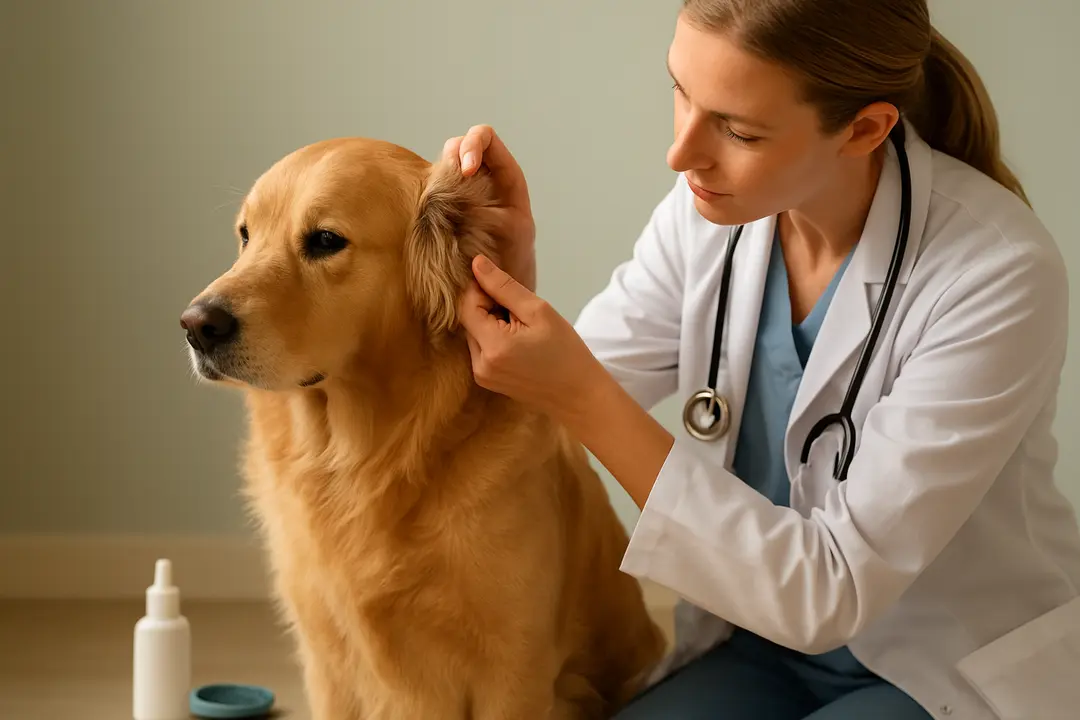
In this guide (6 sections)
An occasional scratch that stops can be normal. If your dog keeps scratching, shaking its head, or rubbing an ear, book an ear exam even if the ear looks clean: allergies, infection, mites, or something lodged in the canal can feel much the same. A head that stays tilted after the shaking stops, especially with a change in balance, needs more urgent attention.
How soon does your dog need an ear exam?
Watch what happens between scratches. A dog that scratches once and goes back to resting is different from one that puts its paw down but keeps pressing the same ear against the rug. Rubbing and shaking count as signs of discomfort, too. You don’t need to wait for a smell or discharge before calling.
| What you notice | What to do |
|---|---|
| A brief scratch that stops; your dog is comfortable, and the ears look and smell normal | Watch for the itch to return. There’s no need to start an ear treatment for an isolated scratch. |
| Scratching, rubbing, or shaking keeps returning, or you see redness, discharge, or a change in the shape of the ear flap | Call your vet for a prompt exam. Mention any odor, pain, swelling, or skin scratched raw, so the clinic can judge how soon to see your dog. |
| A new head tilt that stays there, with your dog otherwise alert, walking normally, and showing no other change | Call your vet now for a same-day assessment. If your clinic is closed, call an emergency clinic for guidance. |
| A tilt with stumbling, falling, trouble standing, or eyes that flick rapidly on their own | Go to an emergency veterinary clinic now. Don’t delay to inspect or clean the ear. |
A shake is a movement; a tilt is a position. After a shake, the head comes back level. With a tilt, one ear stays lower even when your dog is still. PDSA’s guide to ear infections explains why a tilt can mean the problem goes deeper than the outer ear. PetMD’s head-tilt guidance and the American Kennel Club’s guide to balance problems describe signs that need immediate care. If your dog seems unwell in any other way along with the tilt, or you’re unsure whether its balance is normal, describe what you see to an emergency clinic now. Don’t assume it’s an isolated tilt.
What can make an ear itch again and again?
Otitis externa means inflammation of the outer ear canal, the passage leading to the eardrum. It tells you where the trouble is, not what started it. For a dog with repeated ear trouble, it helps to separate two questions: What is irritating the ear now? Is there a reason it keeps happening?
- Allergies: Environmental allergies can make both the ears and feet itch. If your dog starts licking its paws around the time the ear scratching returns each spring, tell your vet about that pattern. It’s a clue, not a diagnosis.
- Yeast or bacteria: An inflamed ear may also have an infection. Allergy and infection aren’t competing explanations: your vet may need to check what’s in the canal now as well as consider why the ear was itchy in the first place.
- Mites or lodged material: Ear mites can cause itching, as can a piece of plant material stuck inside the canal. The treatment for one won’t remove the other. Cornell’s guide to itchy ears describes these possibilities and distinguishes an everyday scratch from scratching that causes distress or breaks the skin.
What to check without putting anything in the ear
- Identify the side and the timing. Watch which paw your dog uses or which side of its head it rubs. Did the scratching start all at once, or has it come and gone for weeks? One ear or both can be affected. If you’re not sure which one hurts, tell the clinic that rather than touching each ear to test it.
- Look at the opening only if your dog is comfortable. Note redness, an unusual smell, visible discharge, or scratches on the skin. “Brown material at the right ear opening” is more useful than guessing that your dog has mites. If your dog cries or pulls away, stop. You don’t need to touch the sore spot again to confirm that it hurts.
- Look at the flap itself. A new, soft swelling like a small balloon in the flap is different from material inside the canal. Hard shaking or scratching can cause blood to collect within the flap, making a pocket called an aural hematoma. Call your vet about the swelling. As the American College of Veterinary Surgeons explains, early attention can limit scarring, and the vet can also investigate what made your dog shake so hard.
- Describe the sequence when you call. For example: “She started pawing at the left ear on our walk. Now she rubs it whenever she lies down, but she holds her head level and walks as usual.” Mention recent grassy walks, baths, or swims if they fit the timing. You’re reporting what happened, not deciding what caused it. If there’s a tilt or a balance change, lead with that instead.
Should you clean a sore ear before the visit?
If the ear is red, swollen, or painful, get veterinary advice before cleaning it. Leave the canal dry rather than flushing it to see whether the itch goes away. Don’t reach in with tweezers or a cotton swab. A swab can push material deeper or injure the eardrum. Peroxide and rubbing alcohol can irritate the canal. VCA’s ear-cleaning instructions explain why a routine for a comfortable ear isn’t the right starting point for a sore one.
Don’t restart old drops, even if they helped the same ear last time, or use medicine prescribed for another pet. Similar-looking problems need different treatments. Some ear products can harm hearing or balance if the eardrum is damaged, and that’s not something you can check at home. If you’ve already applied something, bring the bottle or a photo of its label and tell the clinic when you used it. Banfield’s guide to ear infection treatment explains why the choice of drops matters.
What the vet can see that you can’t
The exam and the ear swab answer different questions. With a lighted instrument called an otoscope, your vet can look past the opening for an obstruction, such as a piece of plant material, and check whether the eardrum is visible and intact. That’s why persistent scratching in a clean-looking ear is still worth an appointment.
With a swab, your vet can collect a small sample from the canal and examine it under a microscope for yeast, bacteria, or mites. The color of the discharge alone can’t make that distinction. The Merck Veterinary Manual’s guide to outer ear inflammation describes how looking down the canal and examining the sample guide treatment.
Before you leave, ask what improvement should look like for your dog, when to report back, and whether the ear needs a recheck. In the following days, notice whether your dog can rest without scratching and whether the rubbing, odor, or discharge returns. If it does, tell the clinic which signs stopped and which came back, rather than restarting medicine on your own. That history helps your vet consider both the current ear problem and a possible recurring trigger.
Talk it through with Vicky
You can tell Vicky what you’re seeing right now, including which ear your dog scratches and what it does between scratches. Vicky will bring in Dr. Nadia (Virtual DVM, DACVD), our veterinary dermatologist, to help you think through that pattern. If your dog has a head tilt with stumbling, falling, trouble standing, or rapidly flicking eyes, go directly to an emergency veterinary clinic now.
Common questions
Does dark, crumbly earwax mean my dog has mites rather than a yeast infection?
No. Dark discharge can have several causes, so its appearance doesn’t prove mites or rule out an infection. If the material keeps coming back, an ear sample examined under a microscope is more useful than another round of cleaning.
My dog suddenly started pawing at one ear after a walk in tall grass. Could something be stuck?
Yes. A piece of plant material can lodge in the canal where you can’t see it. Call your vet for an exam, mention the sudden start during the walk, and leave removal to the clinic rather than reaching in with tweezers.
Could seasonal allergies cause recurring ear trouble if my dog never licks its paws?
Yes. Some dogs have recurring ear symptoms without obvious itching elsewhere. Tell your vet if the episodes return around the same time each year, even if your dog’s feet and skin seem comfortable.
Why might my dog need sedation for an ear exam?
Pain or a blockage can keep your vet from seeing far enough into the canal to assess the ear and eardrum. In that situation, your vet may recommend sedation to complete the exam.
Sources
- Itchy ear problems — Cornell University College of Veterinary Medicine
- Ear infections in dogs — PDSA
- Aural Hematoma — American College of Veterinary Surgeons
- Dog Head Tilt: Causes, Symptoms and Treatment — PetMD
- Otitis Media and Interna (Middle and Inner Ear Infections) in Dogs — Merck Veterinary Manual
- Allergies in Dogs — Merck Veterinary Manual
- Instructions for Ear Cleaning in Dogs — VCA Animal Hospitals
- Dog ear infection treatment: medications and what to expect — Banfield Pet Hospital
- Banfield Pet Hospital — Why is my dog scratching their ear?
- Merck Veterinary Manual — Ear Infections and Otitis Externa in Dogs
- American Kennel Club — Vestibular Disease in Dogs: Signs, Symptoms, Treatment



