
Why does my dog keep shaking their head, and when should a vet check their ears?
Know when to watch head shaking after a swim, when to book an ear exam, and which changes in your dog’s head position or balance mean you should go now.
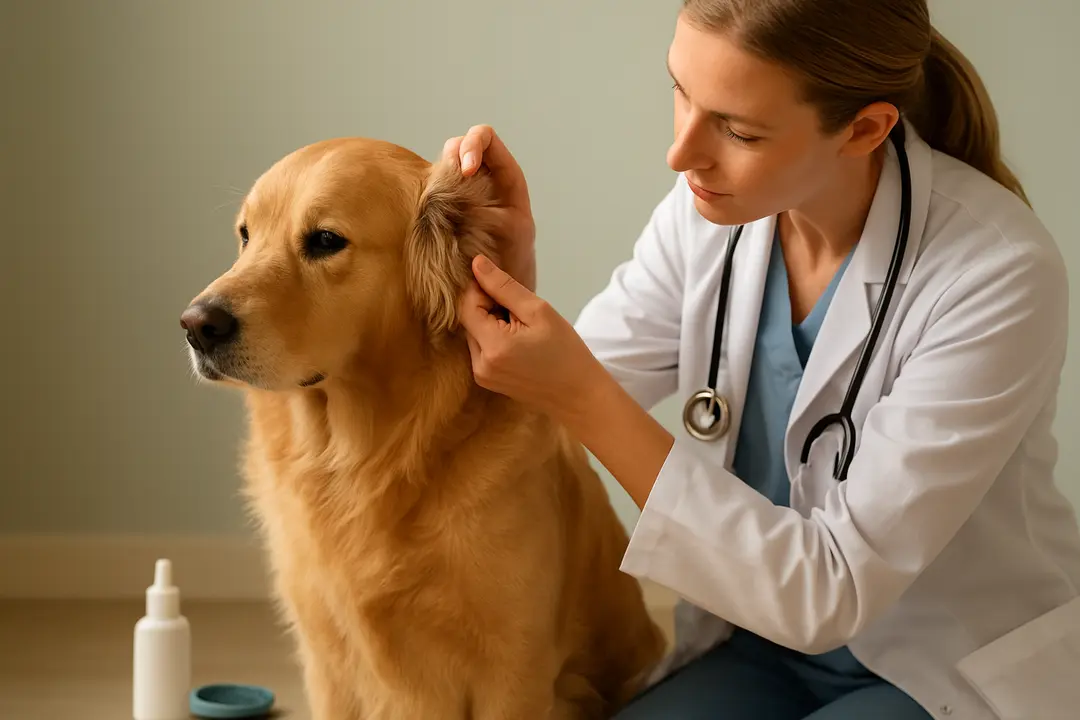
In this guide (7 sections)
A brief head shake after a bath or swim can clear water, but shaking that continues or keeps coming back can mean an itchy or painful ear; book a vet exam even if the ear looks clean. Call your clinic today if your dog is also pawing at the ear or you notice pain, redness, odor, discharge, or a puffy ear flap. If your dog holds their head tilted and is stumbling, falling, or has eyes that flick back and forth while their head is still, go to an emergency veterinary clinic now.
Can the head shaking wait for your regular vet?
First, look at how your dog holds their head when the ears stop flapping. With a shake, the head moves briefly from side to side, then returns to its usual position. With a tilt, one ear stays lower than the other even when your dog is standing still.
| What you notice | What to do |
|---|---|
| A few shakes after getting wet, then your dog is comfortable and leaves the ears alone | Gently dry the outside of the ears and watch. If the shaking returns, arrange an exam. |
| The head comes back to level, but your dog keeps shaking it, with or without visible ear changes | Contact your regular vet for an ear exam. You don’t need to wait for wax or discharge to appear. |
| The ear seems sore, your dog repeatedly scratches it, or you notice redness, odor, discharge, or new swelling of the flap | Call your clinic today. If it’s closed, call an after-hours veterinary clinic for advice rather than assuming it can wait through the weekend. |
| A new tilt stays, and your dog stumbles, falls, or has rhythmic eye movements while the head is still | Go to an emergency veterinary clinic now, even if your regular clinic is open. Don’t wait for a callback or a routine appointment. |
Tell your vet about a new tilt that stays, even if you haven’t noticed stumbling. A tilt with loss of balance can point to a problem deeper in the ear, not just irritation of the flap. Cornell’s guide to itchy ears and PetMD’s guide to head tilt explain this distinction. The American Kennel Club’s guide to involuntary eye movements describes another sign of a balance problem: the eyes keep moving in a rhythm even though the head is still.
Why water, allergies, and infection can look alike
Picture a dog who shakes after a swim, settles down, then starts shaking and scratching one ear again once dry. The swim helps explain the first shake. It doesn’t tell you why the ear is still bothering the dog. Moisture that stays in the canal can encourage yeast or bacteria to grow. VCA’s advice on ear care after swimming makes a useful distinction: dry a comfortable ear, but get advice about one that’s sore, red, or smelly. Ear trouble can happen even when you’ve been careful at bath time.
Allergies can also make the skin lining the ear canal itch and become inflamed. Yeast or bacteria may then grow in that ear. So “allergies or an infection?” isn’t always an either-or question. Your vet may use the term otitis externa. It means inflammation of the outer ear canal; it describes the part that’s sore, not necessarily what made it sore in the first place.
Ear mites are another possibility, especially in puppies. They can cause signs that look like an infection. Neither a bad smell nor the color of the wax tells you which treatment to choose. And the reverse is true: a clean-looking flap doesn’t rule out trouble. What you see when you lift the flap is the opening, not the whole canal or the eardrum.
How to check the ear safely at home
- Watch without touching first. Note which ear your dog paws at, when the shaking started, and whether it stopped completely or only paused. If it came on suddenly during a walk, say so. If you’re concerned about a grass seed, that’s useful to tell the clinic, but it isn’t a reason to search down the canal with tweezers.
- Compare the visible flaps. If your dog allows it, gently lift each flap. Look for redness, material at the opening, or one flap looking thicker than the other. Stop if your dog pulls away or seems sore. You can report that reaction without having to touch the painful spot again.
- Dry only what you can reach from the outside. After water exposure, gently pat the visible part of a comfortable ear with a towel. Don’t push a towel or cotton swab into the opening. A swab can pack material farther down or injure the eardrum.
- Leave a sore ear alone until you get advice. Don’t flush it, pour in peroxide or alcohol, or use drops left from a previous episode. Peroxide and alcohol can irritate the canal. VCA’s ear-cleaning guide recommends checking with your vet before cleaning an inflamed or painful ear. If you’ve already used a cleaner, note its name and whether the shaking started before or after you used it.
What if the ear flap feels like a water balloon?
A soft pocket in a normally thin flap may be an aural hematoma—blood that has collected inside the flap. Forceful shaking or scratching can injure the small blood vessels there. The swelling is different from water sitting in the ear canal after a swim; drying the ear won’t empty the pocket.
When you call, mention the change in the flap itself, not only that your dog has been shaking. There are two things for the vet to assess: the swelling and the irritation that made your dog shake. The American College of Veterinary Surgeons’ guide to aural hematoma explains why the pocket can come back if the original irritation is still there.
What the vet checks, and why it changes treatment
Give the clinic a short timeline: which ear seemed uncomfortable first, whether the shaking followed a bath or walk, what you saw between episodes, and anything you put in the ear. Mention previous ear problems, even if the last episode cleared up. If the flap swelled after the shaking began, that order is worth describing too.
The vet uses an otoscope, a lighted instrument, to look down the canal and check the eardrum if it’s visible. They may also take a small sample of wax or discharge. These checks answer different questions. The scope shows what the canal and eardrum look like; a microscope helps distinguish yeast, bacteria, and mites in the sample. The Merck Veterinary Manual’s guide to outer ear inflammation explains why that sample tells the vet more than the color of the discharge.
The exam matters even if you recognize the smell from last time. The medication that helped before may not match what’s in the ear now. And some drops can harm hearing if they get past a torn eardrum. VCA’s guide to ear infections in dogs explains why your vet checks the ear before choosing drops.
What to watch for over the next few days
If a brief shake after swimming was the only sign, watch for whether it stays resolved. If your dog starts getting up to shake again or begins pawing at the ear, move from watching to arranging an exam rather than trying another round of cleaning.
If your vet starts treatment, ask what improvement to expect and when to have the ear checked again. Report what has changed and what hasn’t: for example, the shaking may have eased but your dog still scratches the same ear. For recurring trouble, ask both what the vet found in the sample this time and whether ongoing inflammation, such as an allergy, could explain why the problem returns.
Talk it through with Vicky
You can tell Vicky what you’re seeing right now, including how your dog holds their head between shakes and whether one ear looks or feels different. Vicky will bring in Dr. Nadia (Virtual DVM, DACVD), our veterinary dermatologist, to help you understand ear irritation and what to ask your vet. If a new tilt comes with stumbling or rhythmic eye movements, go to an emergency veterinary clinic rather than waiting for an online answer.
Common questions
Should I cancel the ear appointment if my dog stops shaking?
If the shaking has been coming and going, keep the appointment or update the clinic before canceling. A quiet stretch is different from a few shakes after a bath that stop completely and never return.
My dog shook more after I cleaned the ear. Did I cause an infection?
The timing alone doesn’t tell you what caused the problem. If the shaking continues or the ear seems sore, stop cleaning and tell your vet what you used and whether the ear was bothering your dog beforehand.
Does dark wax in my puppy’s ears mean I should buy ear mite drops?
No. Mites are more common in puppies, but dark wax doesn’t distinguish mites from yeast or bacteria. Have the ear checked before choosing drops.
Could a foxtail be in the ear if my dog started pawing after a grassy walk?
The timing is worth reporting, but pawing alone can’t tell you what’s in the canal. Tell the clinic which ear your dog is pawing at and how suddenly it started. Leave the search down the canal to the vet rather than probing or flushing the ear.
Can head shaking itself damage my dog’s hearing?
The injury linked to forceful shaking is a blood-filled swelling in the flap. If your dog seems to hear less well, ask your vet to check for underlying ear disease rather than assuming the shaking caused hearing loss. Mention any drops you used, because some can damage hearing if the eardrum is torn.
Sources
- Dog Shaking Head? Here’s When To Worry — PetMD
- Prevent swimmer’s ear — VCA Animal Hospitals
- Itchy ear problems — Cornell University College of Veterinary Medicine
- Aural Hematoma — American College of Veterinary Surgeons
- Instructions for Ear Cleaning in Dogs — VCA Animal Hospitals
- Ear Infections in Dogs (Otitis Externa) — VCA Animal Hospitals
- Ear Infections and Otitis Externa in Dogs — Merck Veterinary Manual
- Dog Head Tilt: Causes, Symptoms and Treatment — PetMD
- Nystagmus in Dogs: Signs, Symptoms, and Treatment — American Kennel Club



