
Why is my cat sneezing and having watery eyes, and when should I call a vet?
Learn what sneezing and watery eyes can mean, how to check your cat’s breathing and eye comfort, and which changes to report when you call your vet.
In this guide (6 sections)
Sneezing and watery eyes together often point to a feline upper respiratory infection, sometimes called a cat cold. Dust or spray can also cause sneezing, but an eye that waters and stays half closed may have an injury of its own. Call your vet promptly if your cat seems ill, squints, stops eating or drinks poorly; if breathing looks difficult, seek urgent veterinary help.
What to check first: breathing, eye comfort, and appetite
1. Watch a few breaths between sneezes. A sneeze tells you that something is bothering your cat’s nose. What matters more is whether your cat settles back into easy breathing afterward. Look while your cat is resting: is the mouth open, or does drawing each breath look like work? If breathing is the concern, lead with that when seeking help, rather than describing your cat as having a stuffy nose. ASPCApro’s guide to feline upper respiratory infection distinguishes breathing difficulty from other respiratory signs. If your cat is getting worse quickly and your regular vet cannot help promptly, contact an emergency clinic.
2. Look at how your cat holds each eye. Wet fur beneath two comfortably open eyes is different from tears running down the cheek beneath a tightly narrowed eye. Without pulling the lids apart, notice whether one eye stays half closed or whether the normally clear front of the eye looks cloudy. Call your vet about a sore or repeatedly squinting eye and ask when it can be examined. Mention any cloudiness. Don’t judge the eye by whether the tears are clear.
3. Check what your cat actually ate and drank. Coming to the kitchen is not the same as finishing a meal. Look at what is left in the bowl, and note whether your cat is alert and interested in the usual things. Loss of appetite and poor fluid intake matter with respiratory illness. If your cat refuses food or water, becomes unusually quiet, or seems worse than earlier, contact your vet. Banfield’s guide to dehydration explains why poor fluid intake during illness is a concern.
If your otherwise healthy adult cat has sneezed only a few times, both eyes open comfortably, and breathing, eating, and activity are normal, you can observe briefly. Check again at the next meal rather than relying on how your cat looked earlier. If sneezing and watering keep returning together, ask your vet about a possible infection. When calling about a kitten, an older cat in poor health, or a cat with a weakened immune system, mention that up front.
Is it a cat cold, an irritant, or an eye problem?
A feline upper respiratory infection can affect the nose and eyes at the same time. A runny nose, repeated sneezing, and eye discharge fit that pattern, particularly if your cat has recently been around other cats. This can happen even in a carefully kept home. The pattern is useful information for your vet, but it won’t tell you exactly which infection is responsible.
Household irritants are another possibility. Dust, smoke, fumes, and aerosol sprays can irritate a cat’s nose. Think back to the first sneeze: were you pouring dusty litter or using a spray nearby? Avoid exposing your cat to it again and note whether the sneezing continues away from it. The timing is a clue, not proof that the product caused both symptoms. VCA’s guide to sneezing and nasal discharge explains which exposures and changes in behavior are useful to report.
An injured eye can produce plenty of clear tears. The cornea is the clear surface at the front of the eye. If part of its protective covering is missing, the injury is called a corneal ulcer. A cat may squint or keep that eye shut, and the surface may look cloudy. The American College of Veterinary Ophthalmologists’ guide to corneal ulcers explains how these injuries can worsen and threaten sight. For example, a cat might eat breakfast and play as usual, yet keep one watery eye closed. The normal breakfast answers your question about appetite, not your question about the eye.
How to keep your cat comfortable and protect other cats
If your cat is breathing comfortably, these steps can help while you arrange or follow your vet’s advice:
- Clean the fur, not the eyeball. Use a soft cloth dampened with warm water to gently lift discharge from around the nose and eyes. Notice where the discharge is before you wipe. If the fur is clean afterward but the eye still looks sore, tell the clinic about the soreness.
- Offer fresh water and slightly warmed wet food. Offer a portion of your cat’s usual canned food so you can see how much disappears. In a shared household, serve it separately; an empty communal bowl won’t tell you whether the sick cat ate. The SPCA New Zealand guide to cat flu describes these comfort measures and the changes to report to a vet.
- Give the symptomatic cat a separate space. Until you have advice about a possible infection, use separate food and water bowls, wash your hands between cats, and wash the sick cat’s dishes and bedding separately. Respiratory infections can spread through contact as well as on hands and shared items. RSPCA Australia’s cat flu guidance explains these precautions. If the cats have already shared a room or bowl, mention that when you call and ask how long to keep them apart.
What not to give for a runny nose or watery eye
Don’t restart old eye drops unless your vet says they are appropriate for this episode. Two eyes that look equally watery may need different treatment, even in the same cat. Drops containing a steroid can worsen herpesvirus eye disease or deepen a corneal ulcer. The veterinary ophthalmologists’ guidance on steroid eye medication explains why a vet needs to check the affected eye before those drops are used.
Don’t give a human cold remedy. A single cold product may contain several drugs, including a decongestant or a pain reliever that is toxic to cats. Acetaminophen is particularly dangerous. Ask your vet before giving any medicine, including antihistamines or pain relievers. If your cat may already have swallowed a cold product, call your vet or an animal poison control service now with the package in hand. Don’t make your cat vomit unless a veterinarian tells you to. The Pet Poison Helpline guide to cold and flu medications explains the risks of combination products.
What to tell your vet and what an exam can show
Start with the change that concerns you most. Then say when the sneezing started, whether one or both eyes are affected, and whether your cat holds either eye closed. Describe breathing at rest and the last meal you actually saw your cat eat. Include recent adoption, boarding, contact with other cats, possible irritants, and any medicine you have used. If you don’t know how much your cat drank, say so rather than guessing.
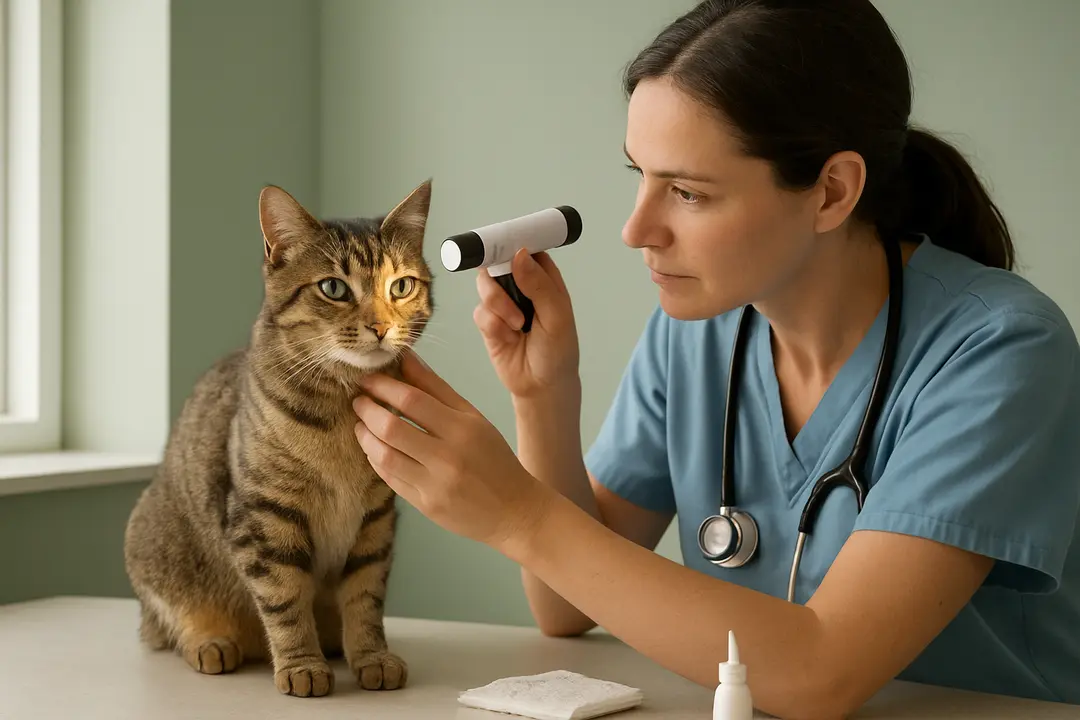
Your vet can examine your cat and listen to the heart and lungs. For a tearing or squinting eye, the vet may use a dye called fluorescein. It reveals places where the cornea’s protective surface is missing. A photo can show how your cat held the eye earlier, but it can’t show what a dye exam would reveal. That is why it’s worth reporting a new squint even if your vet has already assessed the sneezing.
If your vet recommends home care, ask what improvement to expect and when to call back. Follow each sign separately: is breathing still easy, are both eyes opening comfortably, and is your cat eating more like usual? Fewer sneezes don’t cancel out a newly painful eye or a loss of appetite. Report the change rather than waiting for the next scheduled update.
Talk it through with Vicky
If your cat is breathing comfortably and you’re unsure how to describe the sneezing or watering, you can tell Vicky what you’re seeing right now. Include which eye is affected and what your cat did at the last meal. Vicky will bring in Dr. Ravi (Virtual DVM), our feline-friendly general practice veterinarian, to help you sort through those observations. For a sore eye or a cat that seems ill, contact your own vet.
Common questions
Can my vaccinated cat still get a cat cold?
Yes. Vaccination can lessen the illness without preventing every infection. A vaccination record is useful for your vet, but it doesn’t rule out a respiratory infection as the cause of new signs.
Does yellow or green nasal discharge mean my cat needs antibiotics?
Not necessarily. Yellow or green discharge from the nose is a reason to contact your vet, not enough information to choose an antibiotic. Tell the clinic when the color changed and how your cat is feeling and eating.
How many days should I wait for a cat cold to clear?
There isn’t a useful countdown from the first sneeze when you don’t yet know the cause. If signs persist, ask your clinic when an exam is appropriate; if your cat seems worse, call rather than waiting for a set number of days.
My new kitten started sneezing after coming home. Does that mean my other cat caused it?
Not necessarily. Respiratory signs can first appear after adoption, and the day you notice them doesn’t establish where exposure happened. Tell your vet when your kitten arrived, when the signs began, and when the cats first had contact.
Sources
- ASPCApro — Feline Upper Respiratory Infection
- American College of Veterinary Ophthalmologists — Corneal Ulcers
- VCA Animal Hospitals — Caring for Your Sick Cat
- VCA Animal Hospitals — Are over-the-counter medications safe for my cat?
- American College of Veterinary Ophthalmologists — Why Your Cat Should Not Receive Topical Steroid Eye Medication
- What Is Cat Flu and How Is It Managed? — RSPCA Australia
- Cat Flu — SPCA New Zealand
- Signs of Dehydration in Dogs and Cats — Banfield Pet Hospital
- Testing for Sneezing and Nasal Discharge — VCA Animal Hospitals
- Cold and Flu Medications — Pet Poison Helpline



