Why is my dog's poop orange, and when should I call a vet about the color change?
One orange poop can follow a treat. Learn what to check on the next walk, when to call about recurring color or diarrhea, and which signs need urgent care.

In this guide (7 sections)
One formed orange poop can follow pumpkin, carrots, sweet potato, or a dyed treat. If your adult dog is eating and acting normally, you can watch the next bowel movement; call your regular vet if the unusual color lasts beyond two bowel movements or keeps coming back without a clear explanation. Call sooner for repeated watery diarrhea, especially if your dog is also vomiting, refusing food, or unusually tired.
Did only the color change, or is your dog having diarrhea?
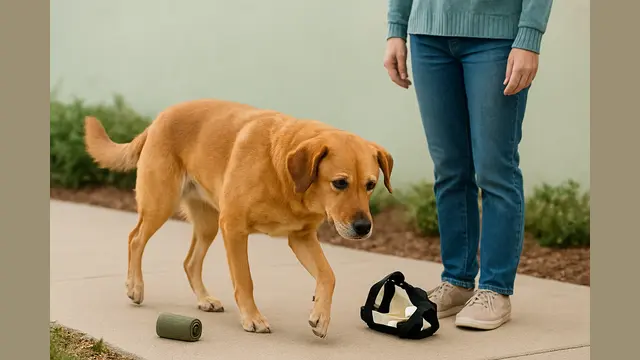
Think about the last time you picked up after your dog. If the poop held its usual shape, your dog ate breakfast, and the only surprise was its color after a pumpkin treat, the next walk is a reasonable time to check again. If you have already cleaned up several orange puddles this afternoon, you have a different reason to call: your dog is passing repeated watery stools. You don't have to figure out what made them orange first.
| What you're seeing | What to do |
|---|---|
| One formed orange stool in an otherwise well adult dog | Check what your dog ate and watch the next poop. |
| The stool stays formed, but the color persists or keeps returning | Call your regular vet about the pattern. Note whether the same treat preceded each episode. |
| Several watery stools, or diarrhea with vomiting, refusal to eat, or marked loss of energy | Contact your vet today. If your clinic is closed, contact a veterinary urgent care service. |
| Your dog collapses, is severely weak, or appears very ill | Go to an emergency veterinary hospital now. Don't wait for another stool or stop to collect a sample. |
VCA's guide to urgent care for diarrhea or vomiting distinguishes dogs who need prompt assessment from those who are severely ill and need an emergency hospital. Your dog's condition matters more than whether you'd describe the poop as orange, rust, or yellow-brown.
What can turn dog poop orange?
Start with food, including anything outside the usual bowl. Orange vegetables can affect stool color, as can food dyes. A dog whose meals haven't changed might still have had a piece of carrot from someone making dinner or a new colored chew on a walk. A food explanation fits best when the timing makes sense and color is the only change. A treat may explain a tint; it isn't a reason to ignore repeated diarrhea.
If your dog ate nothing orange, the shade alone can't tell you why it changed. Not all stool color comes from food. Bile contains a pigment called bilirubin. In the intestine, bilirubin can be turned into the pigment that gives poop its familiar brown color. If bile flow is blocked, stool can look unusually pale. The Merck Veterinary Manual's explanation of bile flow helps explain why color can change, but an orange stool is not a home test for a liver, gallbladder, or bile duct problem.
Loose stool tells you something different from color. When material moves through the intestine quickly, more water remains in the poop. That helps explain a puddle instead of a formed stool; it doesn't establish why the puddle looks yellow-orange. Cornell's guide to diarrhea in dogs recommends paying attention to signs such as vomiting, appetite loss, and low energy rather than judging diarrhea by its appearance alone.
What to check on the next walk
- Look at the shape before you pick it up. Does the poop hold together as usual, sit in a soft pile, or spread like water? Note whether the whole stool looks orange or whether you see a few orange pieces or a coating on otherwise brown poop. A photo before cleanup can capture a distinction that's hard to put into words.
- Write down the time and count the stools. Record when you last saw a normal one. If someone else took your dog out earlier, ask what they saw. “One orange, formed stool since breakfast” means something different from “three watery stools since breakfast,” even if your dog is still keen to go for a walk.
- Check meals, treats, and chews. Look at the ingredients if you have the package. Note what was new and when your dog ate it. If you can't find an orange food or dye, tell the clinic that rather than guessing at a cause.
- Look at your dog as well as the ground. Did your dog eat the usual meal? Is your dog moving around as usual or reluctant to get up? Has there been any vomiting? Keep clean water available. Don't give a human antidiarrheal medicine unless your vet directs you to; some can harm dogs or make certain conditions worse.
How many orange stools should you wait for?
For a change in color alone, PetMD's guide to what dog poop should look like suggests calling if an unusual color lasts for more than two bowel movements. Use that as a checkpoint for an otherwise well dog, not a rule that you must see a third stool before calling. If the color returns to normal but the same unexplained change keeps happening, give your vet the dates rather than treating each episode as a first.
The 24–48 hours you may have heard about applies to watching mild diarrhea in an otherwise healthy adult dog. It is not a waiting period for a puppy, a dog passing repeated watery stools, or a dog who seems ill. Preventive Vet's guidance on what to do about diarrhea makes that distinction and identifies collapse, severe weakness, or looking very ill as reasons for emergency care.
On the next walk, improvement means more than seeing brown instead of orange. Look for your dog's usual stool shape and usual number of trips outside, along with normal appetite and energy. If the color is back to brown but the trips are still frequent and watery, tell the vet about the diarrhea.
What if the orange looks red or the stool is black?
A red streak on the surface is a different observation from an orange tint throughout. If you see a single small red streak on formed poop and your dog feels well, note it, take a photo if possible, and report it to your regular vet. Tell them it was one small streak. If you see blood repeatedly, see more than a streak, or see blood with watery diarrhea, call promptly. The PDSA guide to blood in dog stool explains why a photo or sample can be useful when the color is hard to describe.
Black, tarry poop is not a shade of orange to monitor. It can be a sign of digested blood. Seek veterinary care right away rather than waiting to see whether the next stool is also black. The American Kennel Club's guide to signs of blood loss identifies dark, tar-like stool as a reason for an immediate veterinary visit.
What to tell your vet and what they may check
Lead with the finding that made you call. For example: “My dog passed three watery orange stools this afternoon and refused dinner.” Or, if only the color changed: “The last three stools have been orange, but they hold their shape and my dog is eating normally.” Then share any new foods, vomiting, changes in energy, or possible blood. Ask whether the clinic wants a photo or a fresh stool sample; you can make the call without either.
There isn't one test for orange poop. Your vet uses the food history, stool frequency and appearance, and your dog's other signs to decide what to investigate. For a dog with ongoing diarrhea, that might include a stool test for intestinal parasites or bloodwork. VCA's guide to testing for diarrhea explains how the pattern guides those choices. You don't need to identify a disease before calling; a clear account of what changed is useful on its own.
Talk it through with Vicky
You can tell Vicky what you're seeing right now, including whether the poop held its shape and how your dog feels. Vicky will bring in Dr. Andy (Virtual DVM), our team's AI specialist in general veterinary practice, to help you organize your observations and questions. For urgent signs, contact your own vet or an emergency veterinary hospital directly.
Common questions
My puppy had one watery orange poop but still wants to play. Should I call today?
Yes. Call your vet today for advice about a watery stool in a puppy, even after the first episode. Mention that your puppy is playful and whether they're eating; the observation window for a healthy adult dog with mild diarrhea doesn't apply to puppies.
Is orange slime on brown poop different from poop that's orange all the way through?
Yes. Describe it as a jelly-like coating and tell your vet the color and firmness of the stool underneath. A photo can show the difference, but the coating's appearance alone doesn't identify its cause.
Can a colored chew change my dog's poop even if the main food is the same?
Yes, if the chew contains food dye. Check treats as well as meals when looking for a color source, and note whether only the tint changed or your dog also developed loose stools.
What if I already threw the orange poop away and have no photo or sample?
You can still call. Describe whether it was formed or watery, how often it happened, and how your dog is acting. Ask whether the clinic wants a sample from a later bowel movement; don't wait to collect one if your dog needs care now.
Sources
- What Your Dog's Poo Can Tell You About Their Health — Preventive Vet
- What Should My Dog’s Poop Look Like? — PetMD
- Extrahepatic Bile Duct Obstruction in Small Animals — Merck Veterinary Manual
- Diarrhea — Cornell University College of Veterinary Medicine
- Urgent Care for Diarrhea or Vomiting — VCA Animal Hospitals
- Eight Home Remedies for Diarrhea and Two That Could Be Dangerous for Your Pet — VCA Animal Hospitals
- Blood in Your Dog’s Poo — PDSA
- Testing for Diarrhea — VCA Animal Hospitals
- Preventive Vet — Your Dog Has Diarrhea: What to Do and NOT Do
- American Kennel Club — Anemia in Dogs: Signs, Symptoms, Treatments