Can I catch pink eye from my cat, and what precautions should I take?
Cat-to-human pink eye is rare. Learn how to handle eye discharge, protect other cats, and tell when a red or cloudy eye needs urgent veterinary care.
In this guide (7 sections)
Yes, but rarely. Pink eye means inflammation, not one particular infection: you can’t catch feline herpesvirus or your cat’s reaction to dust, but a bacterium called Chlamydia felis has occasionally passed from cats to people. Avoid direct contact with eye discharge, and wash your hands with soap and water for at least 20 seconds after wiping your cat’s face or giving eye drops.
Which kinds of feline pink eye are contagious?
Conjunctivitis, the medical name for pink eye, means that the thin lining of the eyelids is inflamed. As the Cornell Feline Health Center explains, infection, allergy, and irritants such as dust can all cause it. A red eye alone doesn’t tell you which one you’re dealing with.
| If the cause is… | Can you catch it? | Can another cat catch it? |
|---|---|---|
| Feline herpesvirus-1 | No. This virus infects cats, not people. | Yes. It can spread through eye or nose discharge, saliva, or objects with those fluids on them. |
| Chlamydia felis | Rarely. There have been occasional reports of people developing conjunctivitis after contact with an infected cat. | Yes. This bacterium usually spreads between cats. |
| Allergy or irritation | No. Your cat’s reaction isn’t an infection. | No. Irritation from something like dust doesn’t pass between cats. |
This distinction matters in a home with two cats. If your vet says “feline herpes,” the risk to you is different from the risk to the cat that shares your kitten’s bed. VCA’s guide to feline herpesvirus explains how it spreads between cats. If your vet says “feline chlamydia,” the feline practitioners’ fact sheet on C. felis recommends avoiding infected secretions, particularly if you have a weakened immune system.
When does my cat’s red eye need urgent care?
Call your regular vet when you first notice redness or discharge. If your cat is comfortable, holds the eye open normally, and the front of the eye looks clear, start with that call and arrange the appointment your clinic recommends. You don’t need to wait for the eyelids to crust over before calling.
If your cat is squinting, holding the eye shut, or has a suddenly cloudy eye, call your vet immediately. If your clinic is closed or can’t assess your cat promptly, contact an emergency veterinary clinic rather than waiting for a routine appointment. A cat holding a cloudy eye shut needs emergency assessment now, not another round of cleaning to see if it looks better.
The concern is a corneal ulcer, a sore on the normally clear front surface of the eye. It can look like pink eye at first, but it can worsen quickly and threaten sight. The American College of Veterinary Ophthalmologists’ guide to corneal ulcers describes these signs, and PDSA’s guide to eye problems in cats advises an immediate call for a painful eye. When you call, lead with what you see: “She’s keeping her left eye shut, and the front looks cloudy” tells the clinic more than “I think she has pink eye.”
How to wipe discharge or give prescribed eye drops
It’s easy, even when you’re careful, to wipe a kitten’s wet cheek and then reach up to rub your own eye. Set things up so you can go straight from caring for your cat to washing your hands. You can use the same routine while you’re waiting to find out the cause.
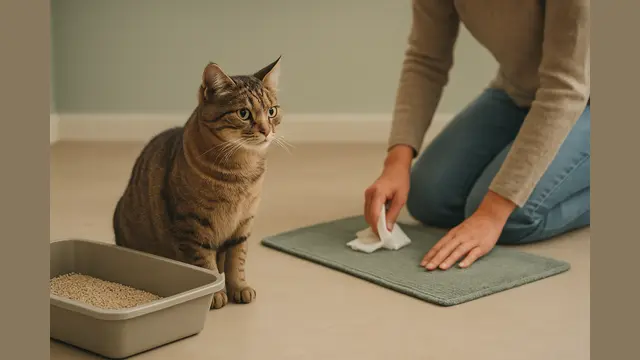
- Get the supplies ready first. If your vet has advised wiping discharge or prescribed drops, have a fresh disposable pad and a place to discard it within reach. Wash your hands before handling the drops. Set your own contact lenses, eye drops, and face cloth aside so you won’t handle them during your cat’s care.
- Use the pad to keep discharge off your fingers. Put a used pad or cotton ball straight in the trash. Don’t lay it down for someone else to pick up, reuse it on another cat, or wipe your cat’s face with a towel someone uses on their own face.
- Wash your hands before touching your eyes. Use soap and water for at least 20 seconds afterward, including after giving drops. If someone held your cat while you wiped the eye, have them wash their hands too. The CDC’s pink eye prevention guidance also recommends clean hands around eye-drop use and throwing away used cotton balls.
Protecting children, people with weakened immunity, and other cats
For a young child, make handwashing something you do together after they touch the cat or the cat’s belongings. An adult should supervise children younger than five. Let an adult take care of used pads; that’s easier than asking a child to remember not to touch their eyes while helping with a wriggling kitten.
If someone in your household has a weakened immune system, focus on who handles the discharge. Where possible, have another household member wipe the eye and give prescribed drops. If you’re the only caregiver, tell your vet and ask them to show you how to do those tasks without touching the discharge directly. If your vet identifies C. felis, keep that name handy in case you need advice from your own healthcare professional.
For other cats, ask your vet two specific questions: “Should I keep them apart?” and “When can they share space again?” Explain whether they groom each other or share bedding, and mention any redness or drainage in the other cat. Until you have guidance, don’t move a cloth or bedding with fresh discharge on it from one cat to another. There’s no single separation period that makes sense for both an infection and a reaction to dust.
What to ask at the veterinary visit
Tell the clinic when the change started, whether it affects one eye or both, and whether you’ve put anything in the eye. The vet needs to examine the eye to distinguish inflammation of the eyelid lining from damage to the clear surface. Don’t start leftover eye medicine while you wait. In particular, steroid drops can worsen feline herpesvirus infection or deepen an ulcer, as the veterinary ophthalmologists’ guidance on steroid eye drops explains.
Before you leave, ask what improvement should look like, when the vet wants an update, and how long to continue any precautions for your other cats. A cheek that looks dry right after a wipe tells you the discharge came off; it doesn’t show that the cause has cleared. If your cat won’t let you give the prescribed drops, tell the clinic which step is difficult and ask for a demonstration rather than switching medicines yourself.
What if my own eye becomes red?
If your eye becomes red or irritated, ask your own healthcare professional to assess it rather than assuming you caught your cat’s infection. If you wear contact lenses, take them out and call your eye doctor. Leave them out until your eye doctor says you can wear them again. A red eye in a contact lens wearer can involve the cornea, as the CDC’s guidance on contact lens–related eye infections explains.
When asking for care, say whether you have eye pain, whether light bothers you, and whether your vision stays blurry after you wipe away discharge. Mention any contact with your cat’s eye fluid and the diagnosis if you already know it. You don’t need to wait for your cat’s appointment to get help for your own eye.
Talk it through with Vicky
You can tell Vicky what you’re seeing right now, including whether your cat holds the eye open and who else at home may come into contact with the discharge. Vicky will bring in Dr. Lena (Virtual DVM, DACVO), our AI specialist in veterinary ophthalmology, to help you plan household precautions and prepare questions for your own vet.
Common questions
I wiped my kitten’s eye and then rubbed mine. Does that mean I’m infected?
No. Contact with discharge is not the same as infection, and cat-to-human pink eye is rare. Wash your hands with soap and water for at least 20 seconds. If your eye becomes red or irritated, mention the exposure when you contact your healthcare professional.
Can my cat sleep on my pillow while its eye is draining?
Offer a separate sleeping spot for now so fresh discharge doesn’t get on fabric that touches your face. If there’s discharge on your pillowcase, change it before using the pillow and wash your hands after handling it.
Do I need gloves to give my cat eye drops?
Focus on keeping discharge off your hands and washing them before and after giving drops. If you use disposable gloves, discard them afterward and still wash your hands. If you have a weakened immune system, ask someone else to handle eye care when possible.
Can my kitten have pink eye if the eye is watery but not crusted shut?
Yes. Conjunctivitis means the eyelid lining is inflamed; it doesn’t require crusting. Describe the watering to your vet, including whether your kitten holds the eye open comfortably, rather than using crusting to decide whether to call.
Sources
- American Association of Feline Practitioners: Chlamydophila felis Disease Information Fact Sheet
- Cornell Feline Health Center: Conjunctivitis
- VCA Animal Hospitals: Herpesvirus Infection in Cats
- CDC: How to Prevent Pink Eye
- CDC Healthy Pets, Healthy People: Cats
- American College of Veterinary Ophthalmologists: Corneal Ulcers
- CDC: How to Treat Pink Eye
- CDC: What Causes Contact Lens-related Eye Infections
- CDC — Hygiene Practices Around Animals
- PDSA — Eye Problems in Cats: An Overview
- PetMD — Cloudy Eyes in Cats: Causes, Symptoms, and When to Worry
- American College of Veterinary Ophthalmologists — Why Your Cat Should Not Receive Topical Steroid Eye Medication