What signs might mean my dog has ear mites, and how can a vet tell them apart from an ear infection?
Ear mites, yeast, and bacteria can all cause itchy ears and dark discharge. Learn which signs to report and how a vet checks your dog for each cause.
In this guide (6 sections)
Ear mites are one possibility if your dog keeps scratching or rubbing their ears, shakes their head, and has dark discharge. Even when the material looks like coffee grounds, the grains are debris, not proof of mites: yeast or bacteria can cause similar signs, and mites and infection can occur together. Your vet may see moving mites through a lighted ear scope or find mites or eggs under a microscope; a separately stained ear sample helps them check for infection.
What you can tell from the scratching and discharge
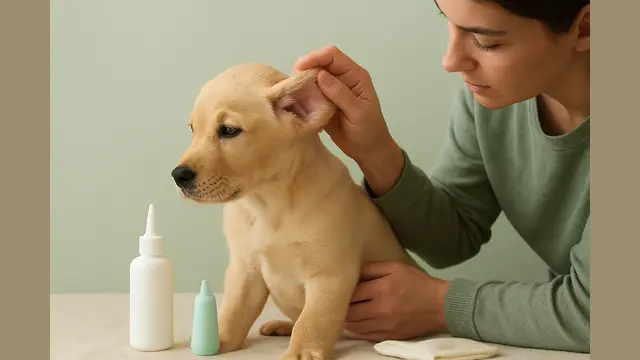
Watch which side your dog rubs or reaches for with a back paw. That can help you tell the vet which ear seems uncomfortable. Head shaking is useful to report, too, but it doesn't tell you which ear is affected. If your dog is comfortable with you lifting the ear flap, look at the entrance to each ear. Don't press on the ear to test how much it hurts.
Intense itching and dark, crusted material can raise suspicion for mites. The mite itself looks quite different from the debris: it's a tiny, pale, moving speck, as VCA's guide to ear mites in dogs and cats explains. You don't need to spot one yourself. A strong odor, moist discharge, redness, or soreness raises concern for infection, but none of those signs rules mites in or out. Color and texture are worth describing, not worth choosing drops by.
When to call your vet and when to go to an emergency clinic
- Arrange a prompt appointment for repeated scratching or head shaking, discharge, odor, or a painful ear. You don't need to wait for the ear to turn bright red. Tell the clinic if your dog pulls away from ordinary touch or won't let you lift the flap.
- Call your vet for urgent guidance if your dog holds their head tilted to one side, stumbles, or loses their balance. A sustained tilt is different from a quick shake followed by a normal head position. These can be signs of a problem deeper in the ear. Describe what your dog is doing so the clinic can direct you to the right care. Cornell's guide to itchy ear problems explains that distinction, and PDSA's ear infection guide describes when to seek help.
- Get veterinary care now for severe pain or distress, such as a dog crying out in pain and unable to settle. If your regular vet can't see your dog immediately, go to an emergency veterinary clinic. Call ahead if you can without delaying the trip. Both Cornell's guide to when to go to the ER and Merck's veterinary emergency guide identify severe pain as a reason for immediate care.
What to check before the appointment
- Write down what changed first. Perhaps your dog started rubbing the left ear yesterday, but you only noticed discharge today. Tell the clinic both details. If you see discharge on one side but your dog scratches both, report that rather than assuming only the visibly dirty ear is affected.
- Mention your dog's age and close contact with other pets. Mites spread through close contact and are common in puppies. For example, if a puppy starts scratching after living with a cat that had confirmed ear mites, that exposure is a useful clue. Say whether the other pet was actually diagnosed or whether you noticed it scratching, too. Those are different pieces of information.
- Mention previous ear trouble and itchy skin. An adult dog whose ear problems keep returning gives the vet another question to explore: is something such as an allergy contributing to the inflammation? Texas A&M's guide to canine ear infections explains why recurring infections deserve a closer look. A history of allergies doesn't identify what's in the ear today, any more than contact with an itchy pet proves mites.
- Leave the ear as it is unless your clinic advises otherwise. The debris you might be tempted to wipe out is useful for testing. Don't put a cotton swab down the canal; it can push material farther in or injure the ear. Avoid peroxide and alcohol, which can irritate a sore ear. If you've already cleaned it or used drops, keep the appointment and tell the vet what you used and when. If your dog is on prescribed ear medicine now, ask the clinic what to do before the visit.
How the vet tells ear mites from yeast or bacteria
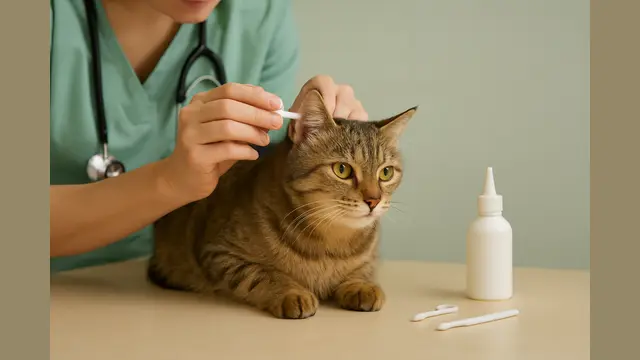
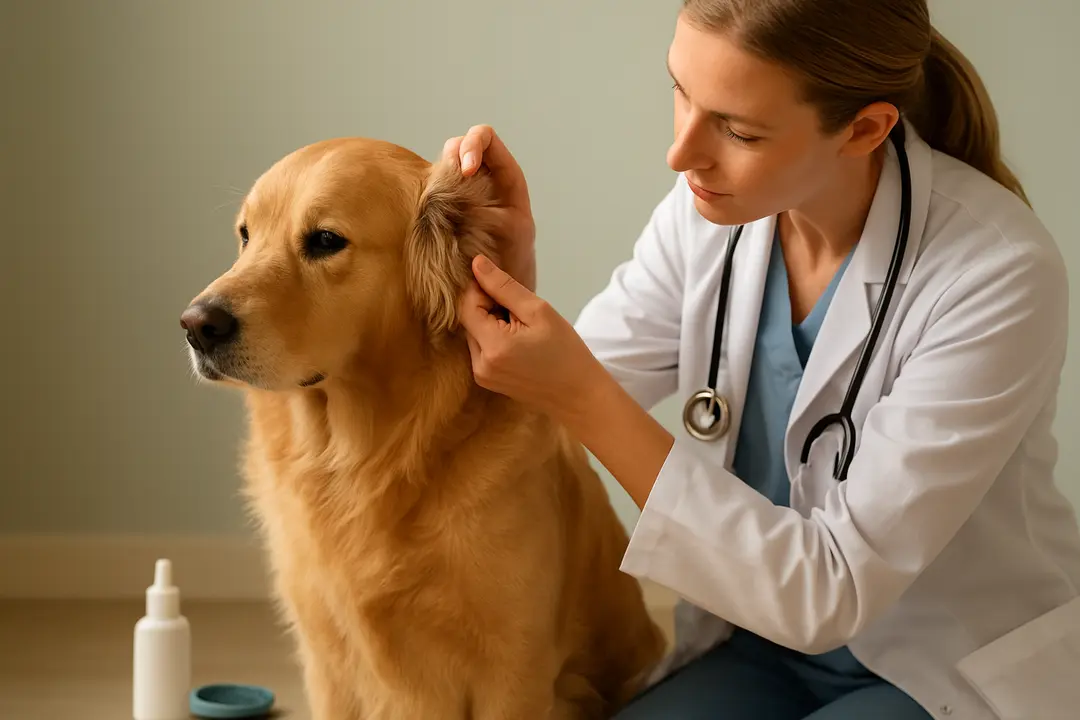
The vet can look into each ear with an otoscope, a lighted instrument that gives a view down the canal. They look for inflammation, debris, anything lodged in the canal, and sometimes the mites themselves moving. They also check the eardrum if they can see it. Pain can limit the exam, and a plug of debris can block the view. Not seeing the eardrum is different from seeing that it's intact.
That distinction matters before you use leftover drops. Some ear medicines can damage hearing if the eardrum is torn. VCA's guide to outer ear infections explains why the condition of the ear affects which drops are safe. If the exam is uncomfortable or the view is blocked, ask what the vet was able to see and what still needs checking.
An ear swab answers a different question: what's in the discharge? The vet can collect material from each ear before cleaning. Samples are kept separate because the findings may differ, even if the ears look alike. Clinician's Brief describes two ways vets examine ear debris:
| Check | What the vet looks for | What the result means |
|---|---|---|
| Debris placed in mineral oil on a microscope slide | A mite or its eggs | Finding either identifies mites in the sampled ear. The oil is for examining the sample, not a home remedy. |
| A separate smear treated with a stain | Yeast, bacteria, and cells involved in inflammation | This test, called ear cytology, helps the vet judge whether yeast or bacteria are contributing to the sore ear. |
Finding a mite can answer the parasite question without answering the infection question. Likewise, seeing yeast on a stained slide can explain why the vet recommends treating yeast; it doesn't mean the dark grains you saw at home were yeast you could recognize by sight.
What the findings mean for treatment and follow-up
If your vet says your dog has otitis externa, that means inflammation of the outer ear canal. It tells you where the problem is. A useful next question is, “What did you find in each ear?” If the vet identified mites, you'll need a plan to treat the parasite and advice about pets in close contact. If yeast or bacteria are contributing, the vet can select treatment for those findings. With a mixed problem, ask which part of the plan addresses each cause.
Before you leave, find out whether to clean either ear, how your clinic wants you to do it, and when to report back. Over the next few days, watch your dog's comfort as well as the discharge: are they rubbing the ear less, still shaking their head, or pulling away when you approach that side? Ask what improvement to expect on the treatment your dog was given rather than relying on how clean the ear looks.
If dark material returns after cleaning or after a course of treatment, tell the clinic whether the itching ever stopped and whether it's the same ear again. A recheck can help distinguish a current infection, mites, or an underlying problem. Returning discharge is a reason to reassess the ear, not a reason to restart the last set of drops on your own.
Talk it through with Vicky
You can tell Vicky what you're seeing right now, including which ear your dog rubs, what the discharge looks like, and whether this has happened before. Vicky will bring in Dr. Nadia (Virtual DVM, DACVD), our veterinary dermatologist, to help you decide what to report to your clinic and what to ask about the ear exam.
Common questions
Does black earwax mean mites if my dog's ear flap isn't red?
No. Dark discharge can occur with mites, yeast, bacteria, or a mix of them. The flap is only the part you can see; its color doesn't tell you what's happening farther down the canal.
Can a vet identify ear mites from a photo or video?
A photo can document the discharge, and a video can show the difference between a head shake and a head tilt. A picture of dark grains can't identify mites or eggs, show what would be on a stained slide, or establish that the eardrum is intact.
If my dog has ear mites, do my other dogs or cats need treatment even if they aren't scratching?
They may. Because mites spread through close contact, tell your vet about all dogs and cats that share your home, including those without obvious itching. Ask which pets to treat and what to use for each rather than sharing one pet's drops.
Why would my vet clean the ear after asking me not to clean it at home?
The order matters. Before cleaning, the debris gives the vet material to test; after sampling, clearing obstructing debris may let the vet see more of the canal and eardrum.
If infection drops helped last time, does that rule out mites this time?
No. Improvement during an earlier episode doesn't identify the cause of a new one. Tell your vet what helped and for how long so they can consider that history alongside the current ear findings.
Sources
- Ear Infections in Dogs (Otitis Externa) — VCA Animal Hospitals
- Ear Infections and Otitis Externa in Dogs — Merck Veterinary Manual
- Otitis Externa — Clinician's Brief
- Ear infections in dogs — PDSA
- What to Do in a Dog or Cat Emergency — Merck Veterinary Manual
- Itchy ear problems — Cornell University College of Veterinary Medicine
- Ear Mites in Cats and Dogs — VCA Animal Hospitals
- Hard to Hear: The Facts of Canine Ear Infections — Texas A&M Veterinary Medicine
- Instructions for Ear Cleaning in Dogs — VCA Animal Hospitals
- When to go to the ER — Cornell Riney Canine Health Center