How can I tell if my dog is in pain, and when should I call a vet?
Learn which changes in movement, sleep, and chewing can signal pain in your dog, when to call your vet or go to the ER, and what to record for the visit.
In this guide (7 sections)
Your dog may be in pain even without a whimper: look for a change in how they get up, walk, settle down, eat, or respond to you. Call your vet about a new limp that persists, discomfort that is getting worse, or a familiar activity that has gradually become difficult. Go straight to an emergency veterinary hospital after a major accident or if your dog suddenly loses the use of their legs and can't stand or walk without help.
When to go to the emergency vet
If your dog was hit by a car, don't use their ability to walk as a reason to wait. A dog can get up after an impact and still have an injury you can't see. Tell the emergency hospital what happened and what you see now, including whether your dog seems severely painful or is using their belly to work for each breath. You don't need to find the injury before you go. Cornell's guide to emergencies in dogs explains why the accident itself matters.
A sudden loss of leg function is different from a limp. A limping dog may favor one leg but still get up and cross the room independently. If your dog suddenly can't use their legs to stand or walk, don't ask them to try again for a video. VCA's guide to pain and limping distinguishes dogs who need an emergency hospital from those who can walk but need a limp assessed.
When to call your regular vet
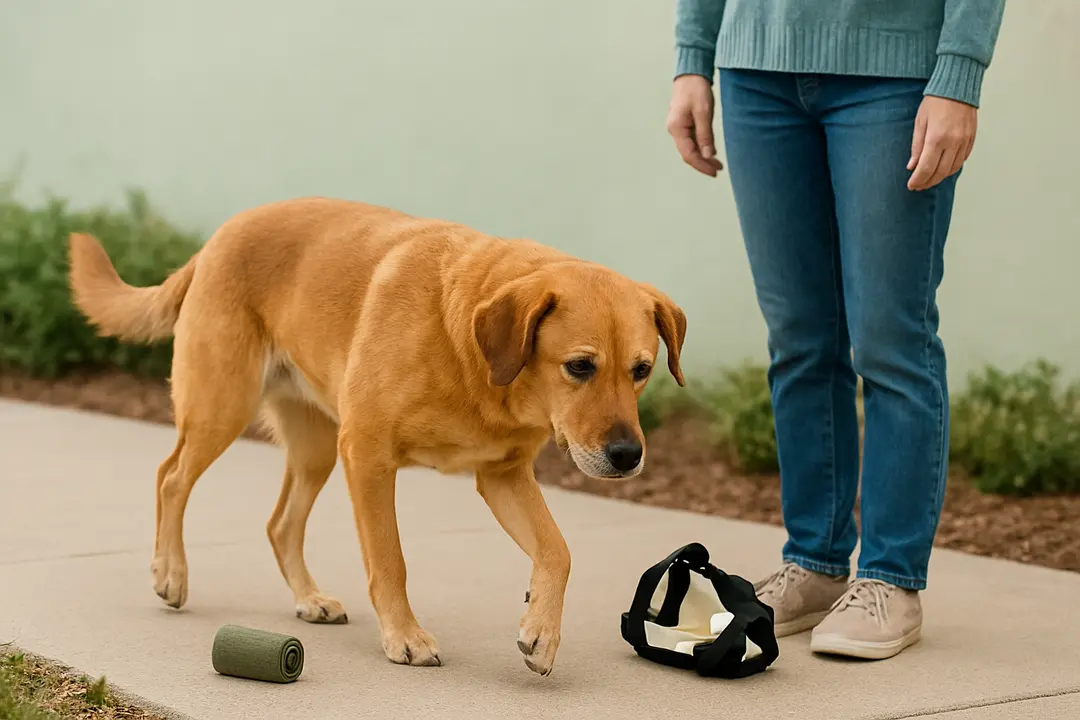
If a new limp continues, call your vet even if your dog still puts the paw down. Say whether your dog can walk on their own, when the limp began, and whether it's becoming more noticeable. Ask the clinic how soon your dog should be seen. You don't have to decide which joint hurts to make that call.
Book an exam for gradual changes, too. Maybe your dog used to rise from their bed as soon as you came home. Now they greet you by wagging their tail but hesitate before getting up. Or perhaps they still ask for dinner but leave behind the pieces they used to crunch. These changes are easy to miss, even for a careful owner. What matters is the difference from your dog's usual routine, not whether another dog of the same age does the same thing.
Four ways to spot pain without testing for it
Choose an ordinary moment when your dog is doing something on their own. The American Animal Hospital Association's guide to pain signs includes changes in sleep, appetite, posture, and social behavior as well as limping. Here's what those signs can look like at home:
- Watch the first few steps after rest. Does your dog rise in one movement or pause before standing? Do they put each paw down, touch one foot briefly to the floor, or carry it? Notice if they walk differently after those first steps. If you're unsure which leg is involved, a description such as “stiff when getting off the bed” is useful on its own.
- Watch what happens when they try to sleep. A dog may lie down, stand up again, and change places repeatedly rather than settling in their usual spot. Panting at rest, pacing, or holding the back hunched can also accompany pain. One sign doesn't identify the cause. Tell your vet what you see together, such as pacing at night and hesitating to rise in the morning.
- Notice how they respond when you approach. A dog who usually enjoys your company may move away, hide, or growl. They may turn one side away from you or keep licking the same spot. Give them space. Where they lick is worth reporting, but you don't need to press there to find out whether it hurts.
- Look at how they chew, not just whether they eat. An older dog with mouth pain may still come to the bowl but drop hard pieces, favor one side, or lose interest in crunchy food. Describe that change and ask your vet for an oral exam. The American Veterinary Dental College's guide to oral disease in older pets explains why a change in chewing shouldn't be put down to age alone.
What if the signs come and go?
Suppose your dog stops at the steps one evening but walks across the kitchen normally the next morning. Both observations count. Tell the clinic which movement was difficult, when it happened, and what your dog could do comfortably afterward. There's no need to send your dog back up the steps to settle the question.
Timing helps separate different histories without asking you to make a diagnosis. A limp first noticed after an injury is one useful history. Stiffness after naps that has become more noticeable over several weeks is another. Neither a better morning nor a single bad evening tells you by itself what's causing the change. If it happens again naturally, a short video can show the part that's hard to put into words.
What you can safely do while arranging care
Observe rather than trying to locate the pain with your hands. In particular, don't bend, press, or try to straighten a severely painful leg. Moving a broken bone or a joint that's out of place can make an injury worse. Even a dog who knows you well may bite when hurt. VCA's first-aid guidance for limping dogs advises against trying to examine a dog in severe pain.
Ask your vet before giving any pain medicine, including a human pain reliever or medication left over from another pet. If your dog has already swallowed a human painkiller without veterinary direction, call your vet or ASPCA Animal Poison Control now, even if your dog looks well. Get professional instructions rather than trying to treat the exposure yourself.
After a spay or neuter, use the surgical team's plan. Give prescribed medication as directed and prevent running and jumping. If your dog seems more uncomfortable despite the plan, contact the team rather than changing the medication yourself. A dog who seems seriously ill or is in such distress after surgery that they can't get comfortable needs care right away. Tufts' spay and neuter aftercare guidance explains when to get help during recovery.
What to tell the clinic and what to watch next
Start with the activity that's changed. “For the past three mornings, my dog has hesitated to stand after sleeping” gives the clinic a clearer picture than “my dog seems old.” For a limp or stiffness, have these details ready:
- Onset and pattern: When did you first see it? Does it follow rest or activity? Is it happening more often or getting worse?
- What your dog can do: Can they rise and walk without help? What have they stopped doing on their own?
- Recent events: Was there an injury or operation? What medication has your dog already had?
At the visit, your vet can compare that history with how your dog stands and moves during the exam. A limp that shows up on the first steps out of bed may not be visible in the exam room. Cornell's guide to a visit for limping explains how a home video can help in that situation.
Before you leave, ask what improvement should look like for your dog and when the clinic wants an update. Pick a familiar activity that fits the problem: rising from bed for stiffness, settling at night for repeated pacing, or chewing a meal for mouth discomfort. That gives you and your vet something specific to discuss if the sign continues, returns, or changes.
Talk it through with Vicky
You can tell Vicky what you're seeing right now, whether it's a pause before standing or a change at the food bowl. Vicky will bring in Dr. Priya (Virtual DVM, DACVAA), our Anesthesia & Pain Specialist, to help you describe the change and decide what to ask your vet. If your dog needs emergency care, go directly to the emergency hospital.
Common questions
Can my dog be in pain if they never whine and still want to play?
Yes. Dogs can mask pain, and wanting to play doesn't cancel out a limp or stiffness you see at other times. Tell your vet both what your dog still enjoys and which movements have changed.
Should I cancel the appointment if my dog is walking normally this morning?
Call the clinic with the update before canceling. Tell them how long the limp lasted, whether it has happened before, and whether you have a video so they can advise you about the appointment.
Does stiffness after a nap mean my dog has arthritis?
Not necessarily. Stiffness tells you that getting moving looks difficult, but it doesn't identify the cause. Tell your vet whether it began suddenly or crept up over time and whether you notice it after activity as well as rest.
Should I film my dog's whole walk or focus on the leg I think hurts?
A short clip of the movement that concerns you is useful; you don't have to identify the sore leg first. If the change is most obvious when your dog gets up, capture that moment when it happens naturally rather than asking them to repeat it.
Sources
- Cornell University College of Veterinary Medicine — When to go to the ER
- Merck Veterinary Manual — When to See a Veterinarian
- VCA Animal Hospitals — Urgent Care for Pain or Limping
- Tufts Cummings School of Veterinary Medicine — Aftercare
- American Animal Hospital Association — How to Tell if Your Dog Is in Pain
- VCA Animal Hospitals — Signs of Pain in Dogs
- American Veterinary Dental College — What Oral Disease in Senior Dogs and Cats Looks Like and Why It Is Frequently Missed at Routine Visits
- Cornell University College of Veterinary Medicine — What to expect when taking your limping dog to the veterinarian
- VCA Animal Hospitals — First Aid for Limping Dogs
- ASPCA Poison Control — What to Do if Your Pet Is Poisoned